
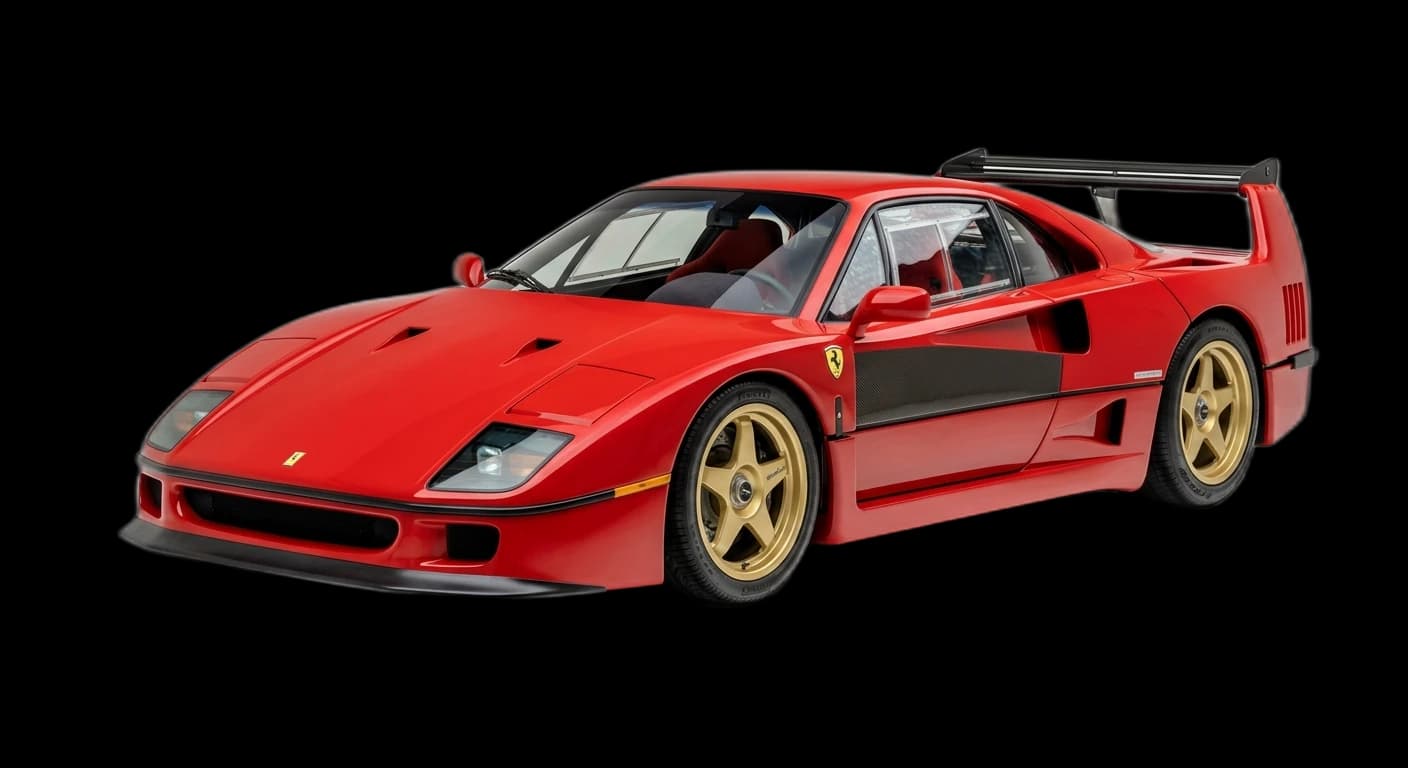
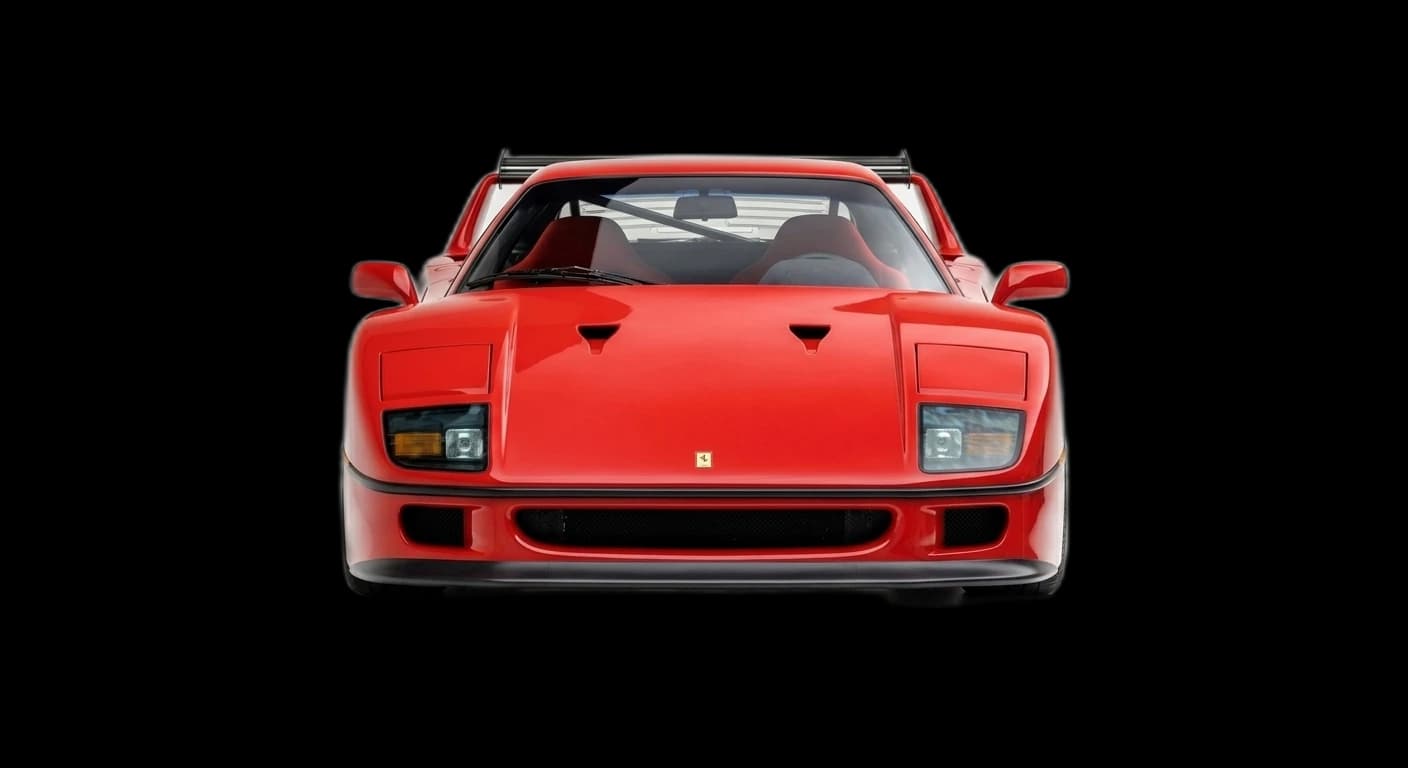
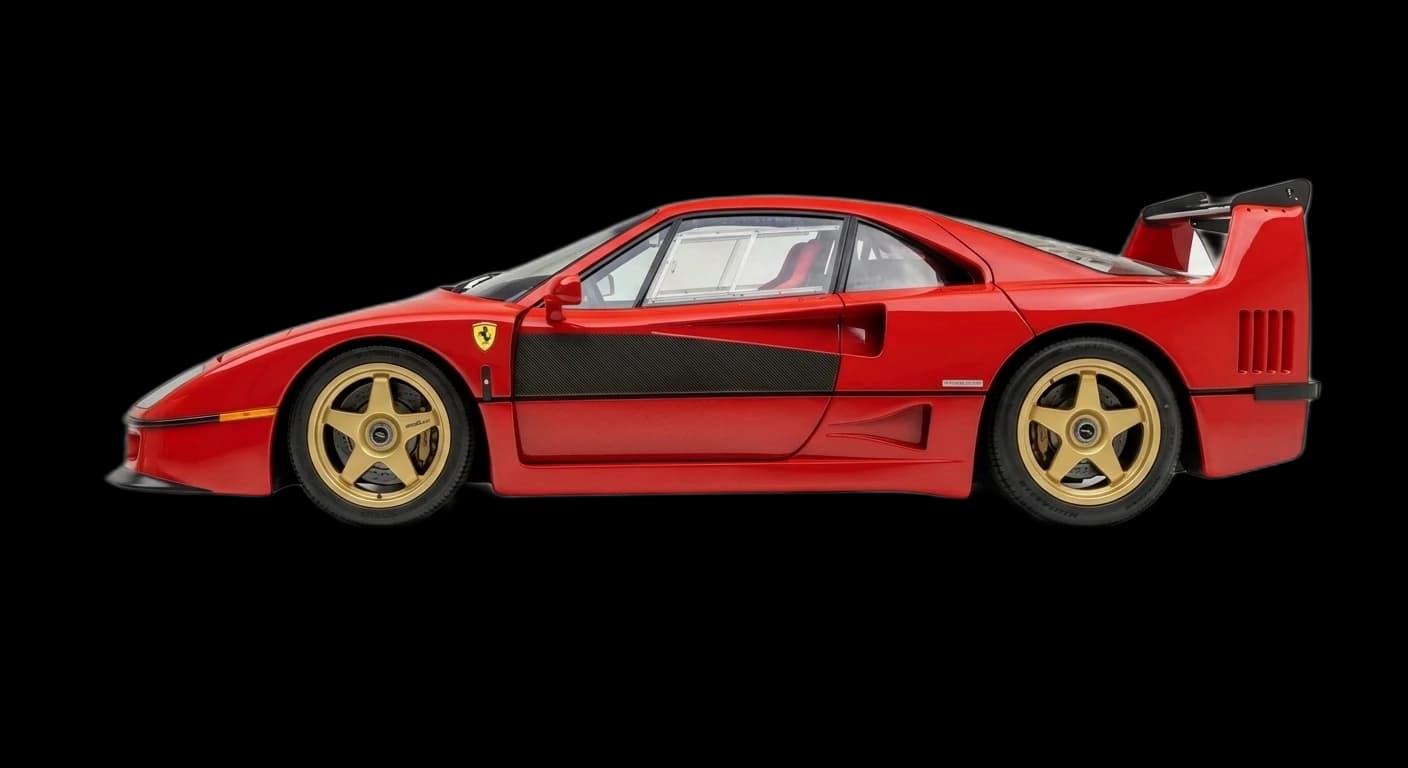
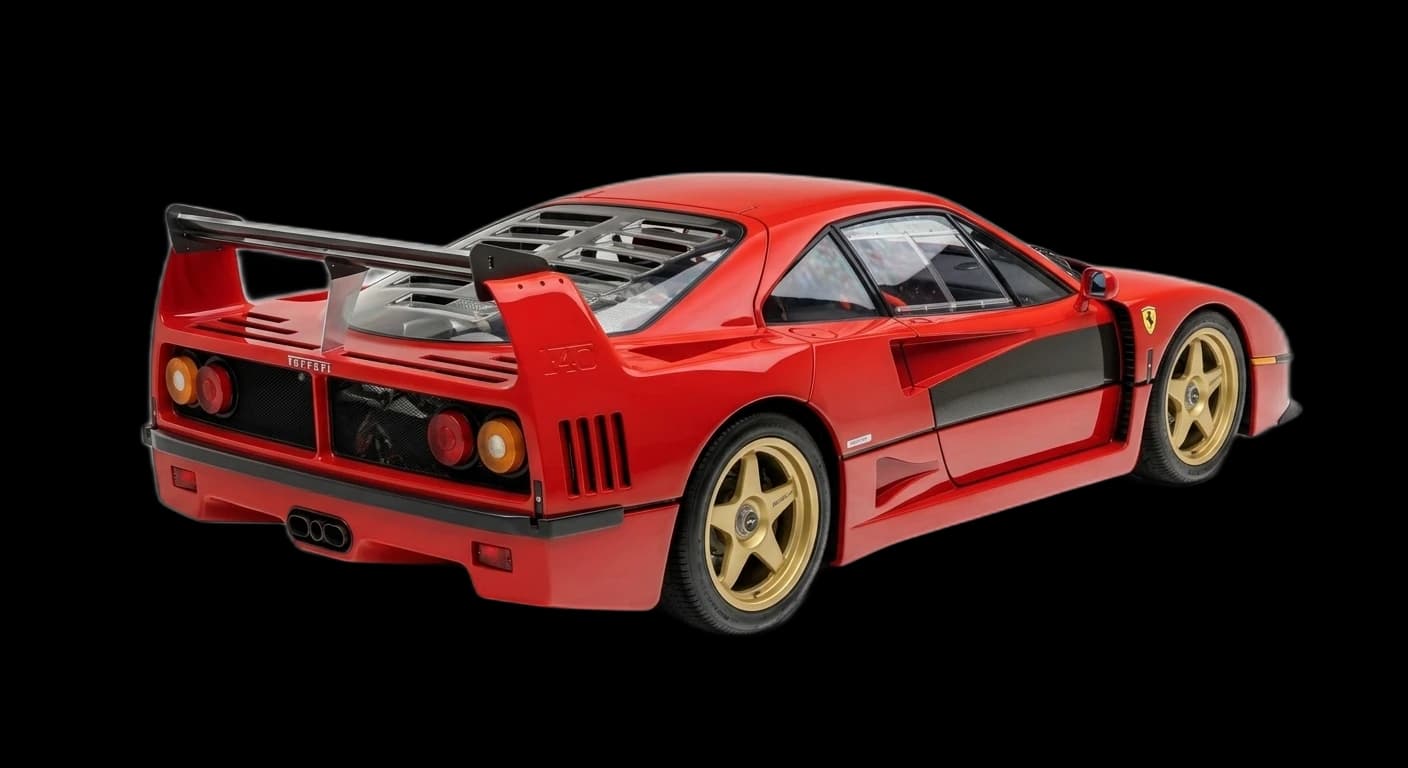
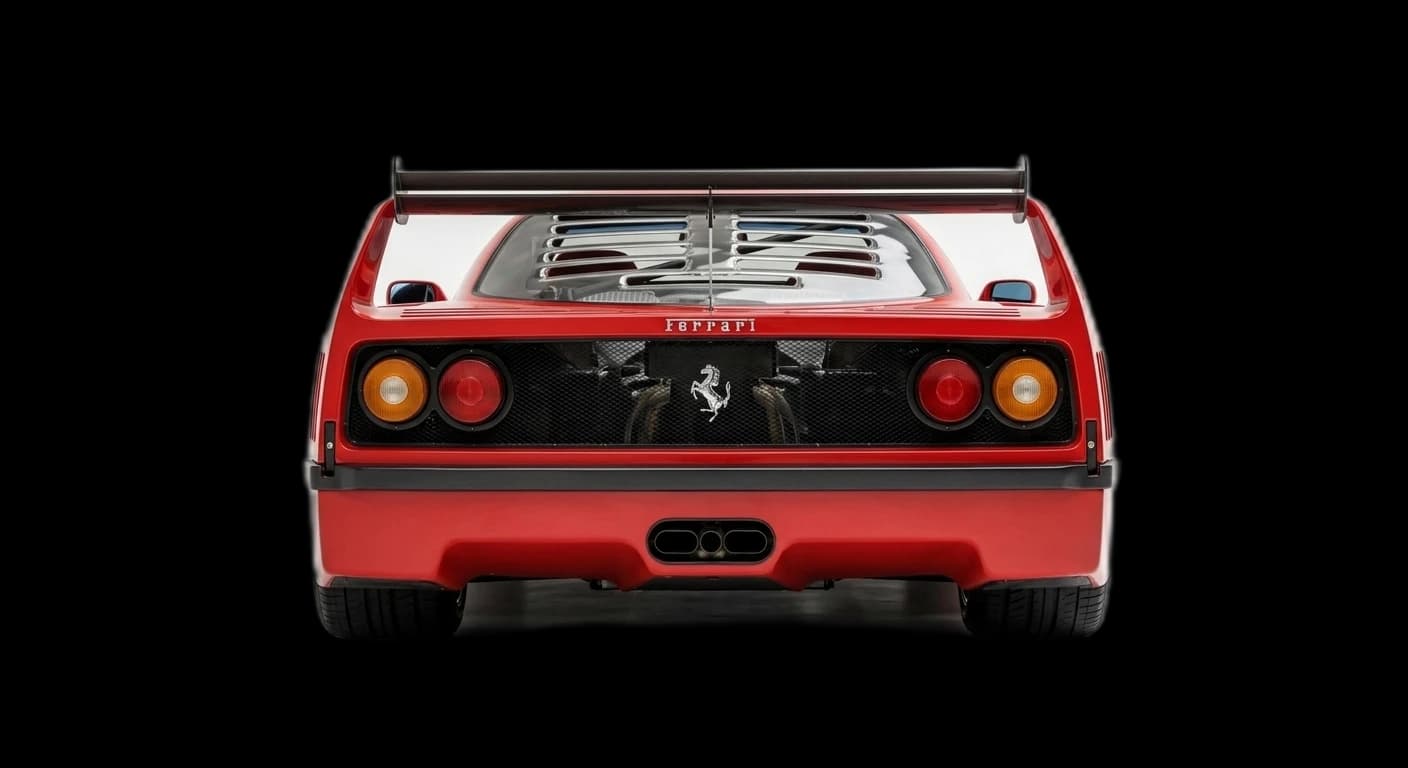
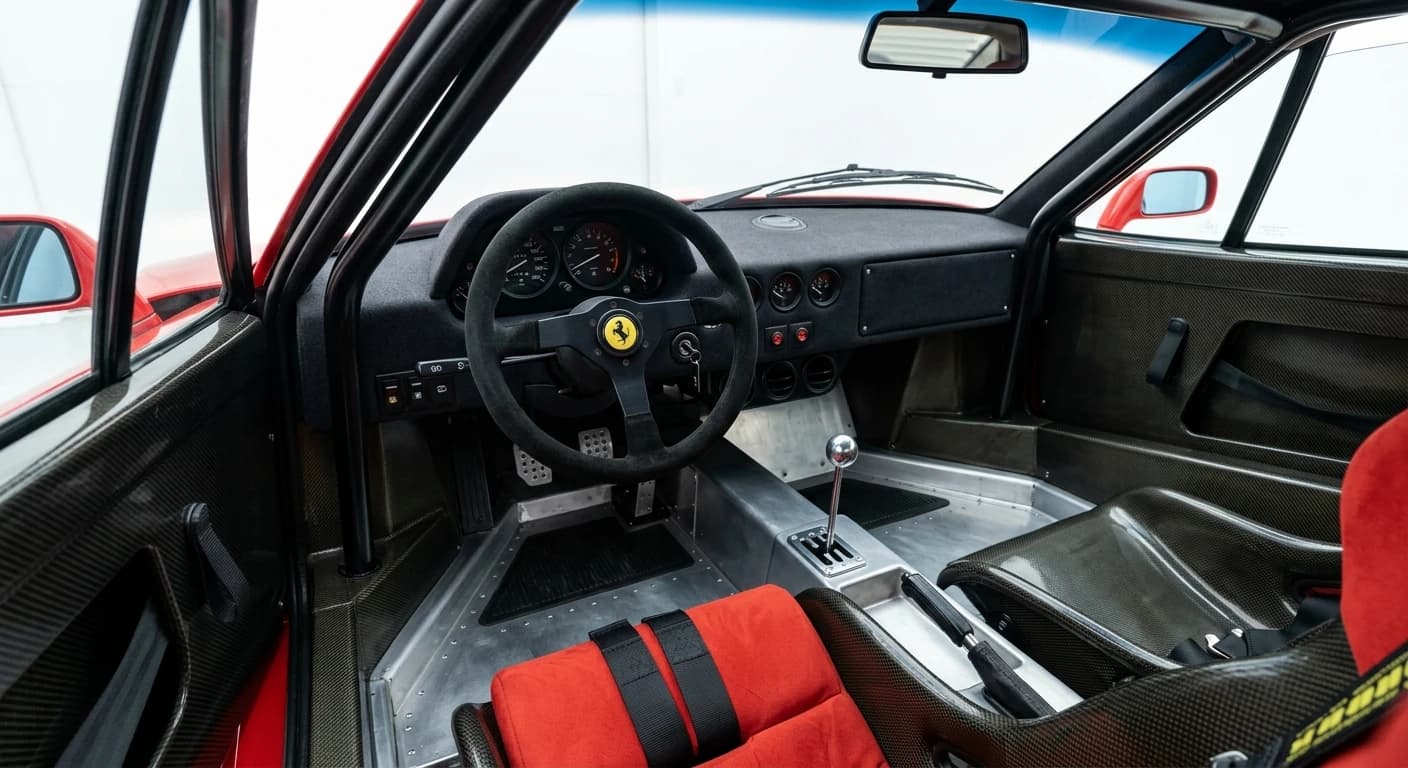
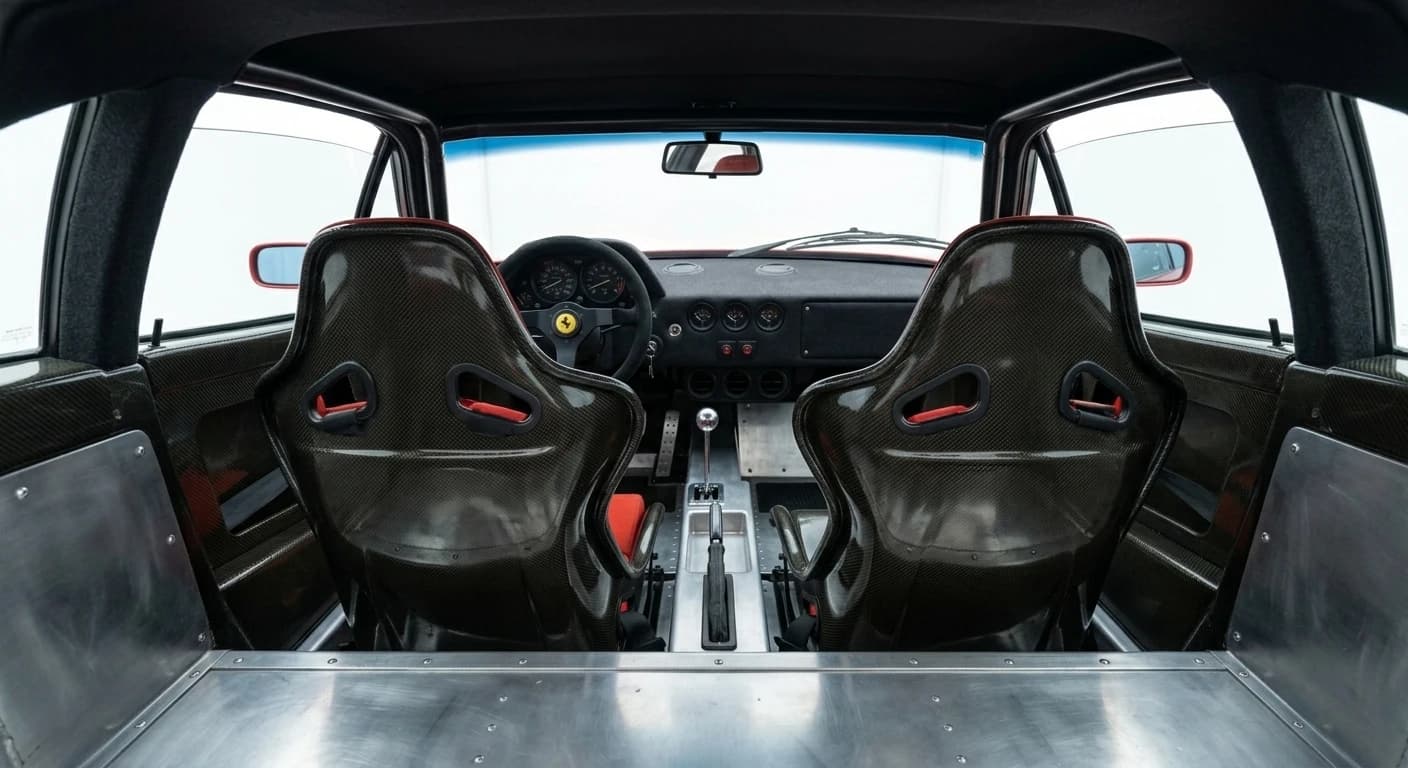
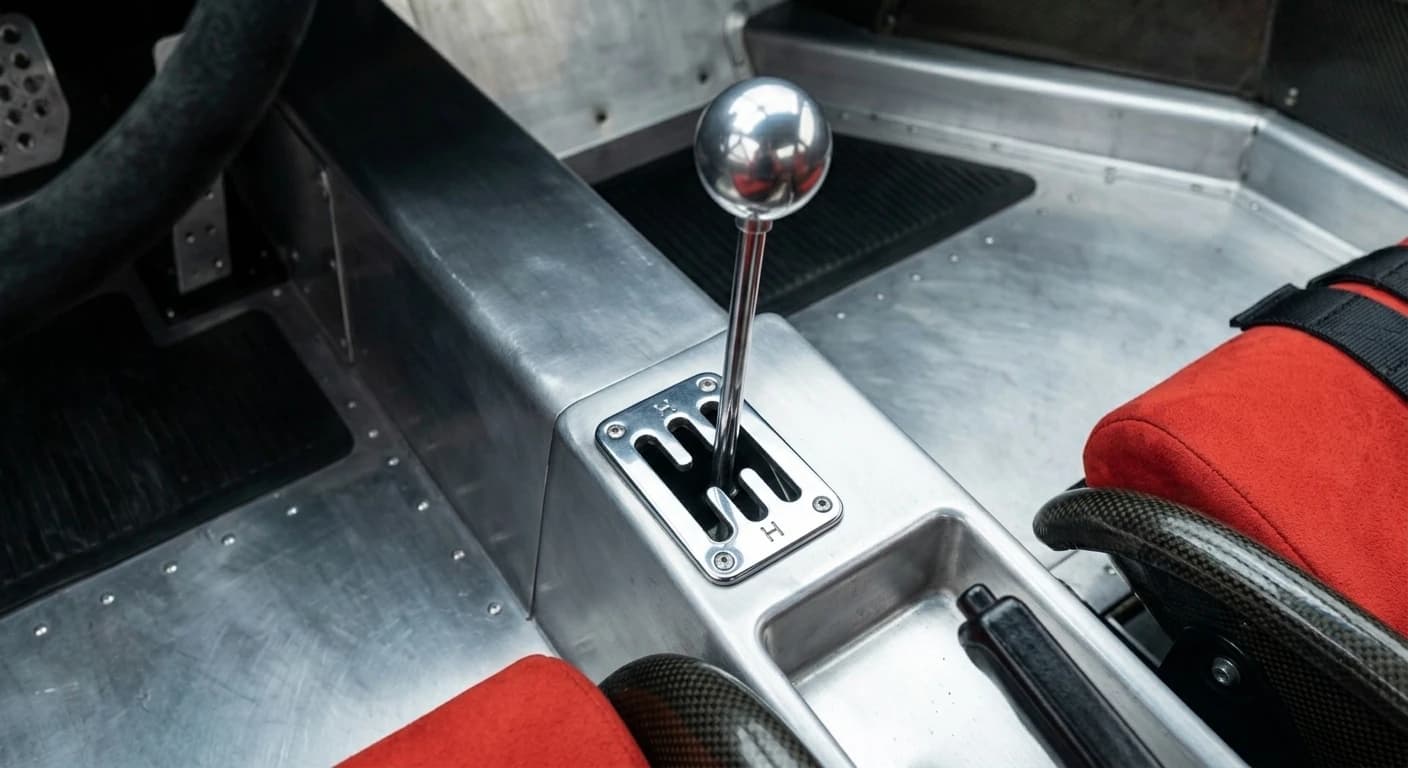
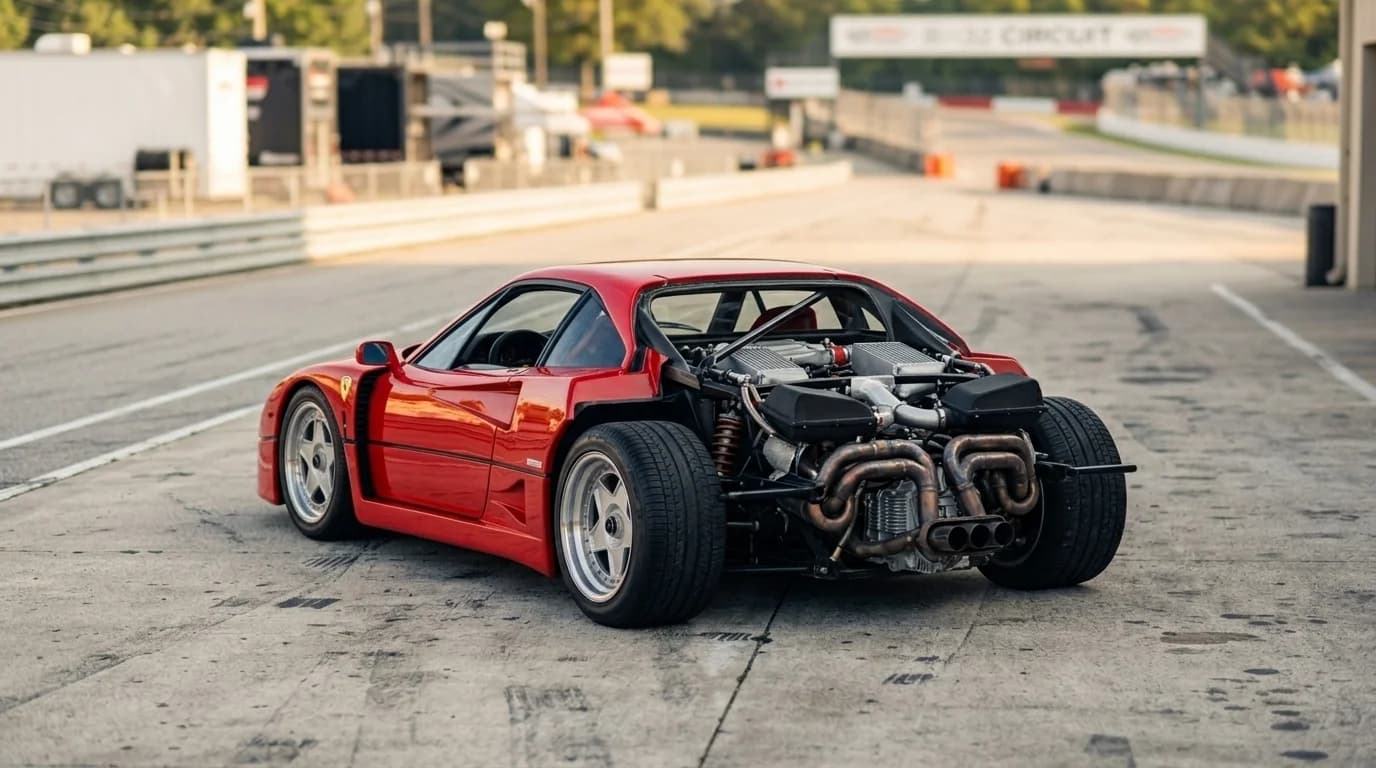
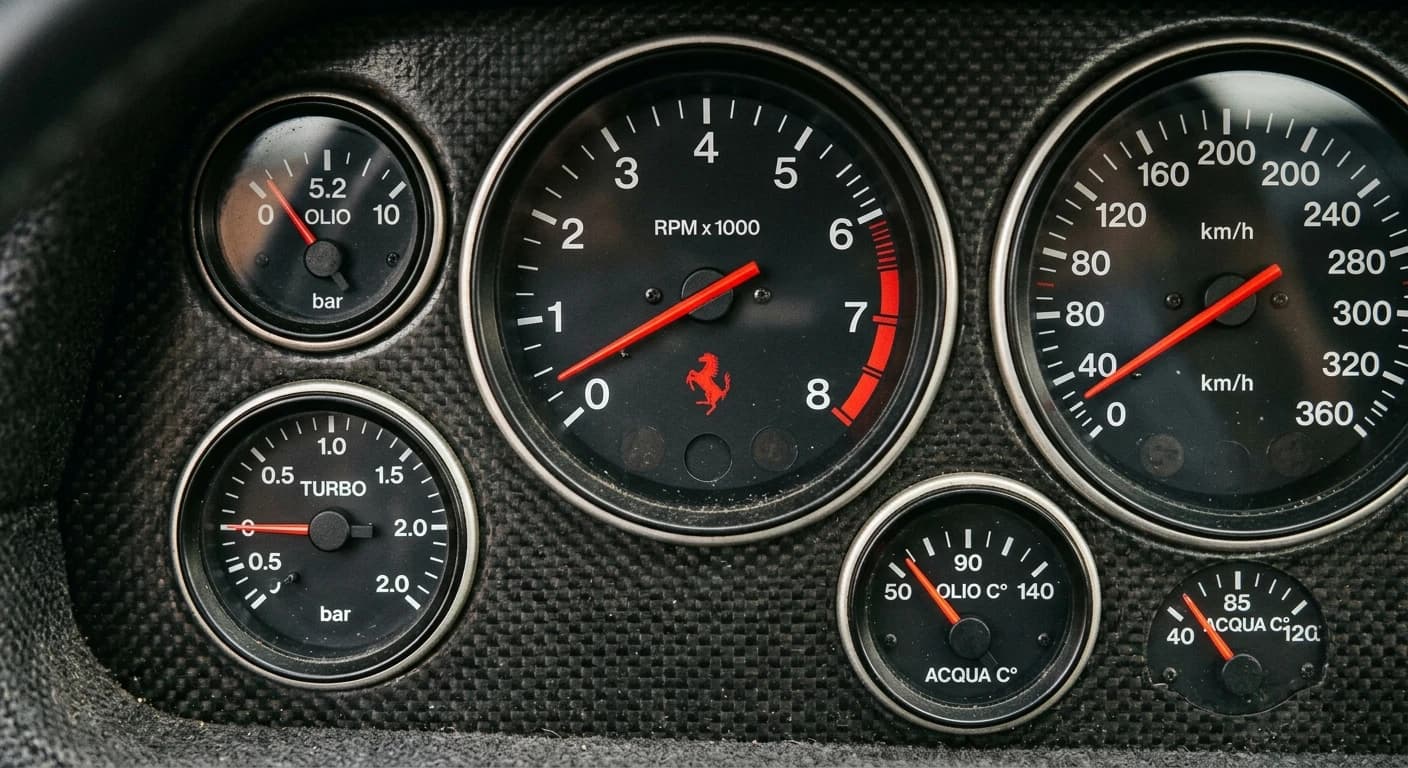
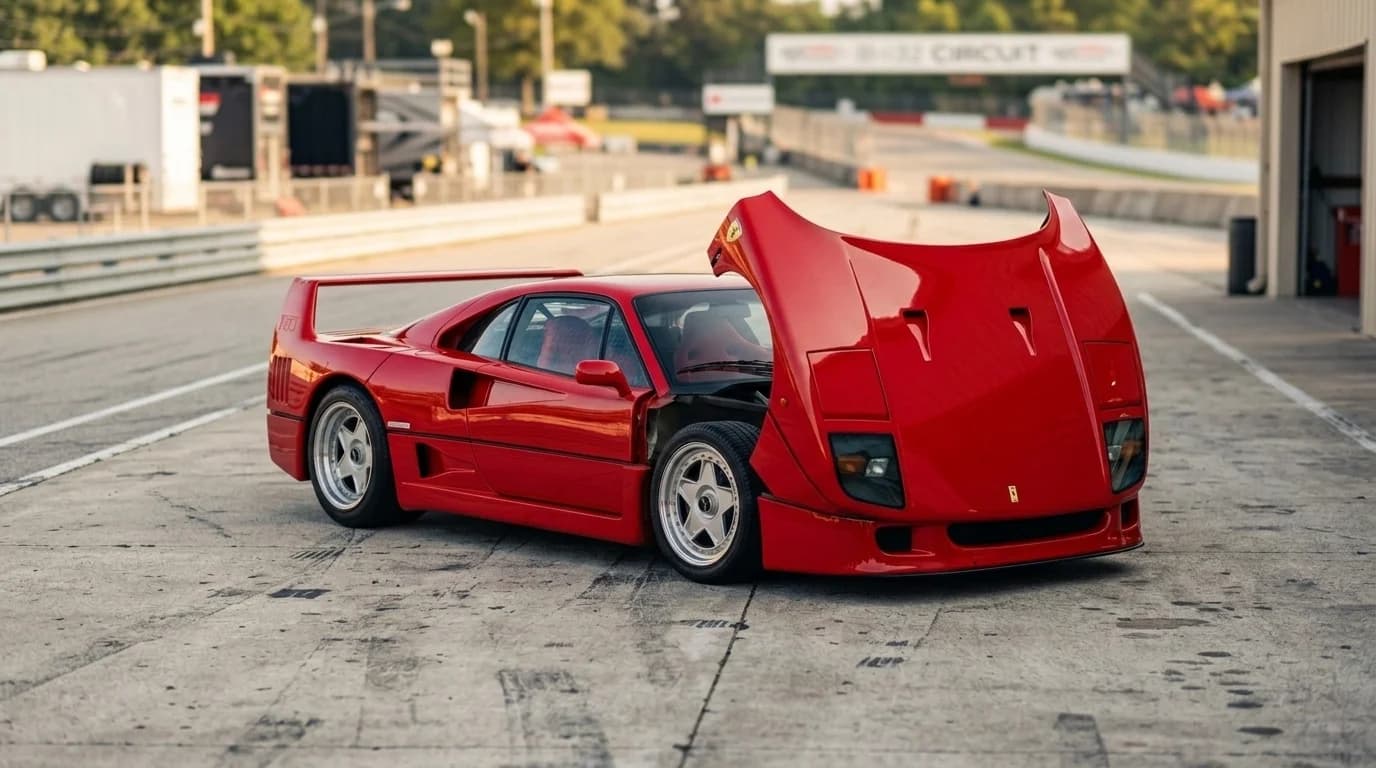
The last Ferrari personally approved by Enzo Ferrari before his death in 1988. The first production car to exceed 200 mph. Built to celebrate Ferrari's 40th anniversary with no compromise to comfort, no power steering, no ABS, and Kevlar-reinforced carbon fiber bodywork.
History
Enzo Ferrari was 89 years old when the F40 was unveiled at Maranello in July 1987. He wanted a car that embodied everything Ferrari stood for: raw speed, racing technology on the road, and zero compromise. The result was the most extreme road car of the 1980s.
The twin-turbocharged V8 produced 478 hp from just 2.9 liters, using two IHI turbochargers with water-to-air intercoolers. The body was constructed from carbon fiber, Kevlar, and fiberglass, with no sound deadening, no carpet in early cars, and pull-string door handles. It weighed just 1,100 kg.
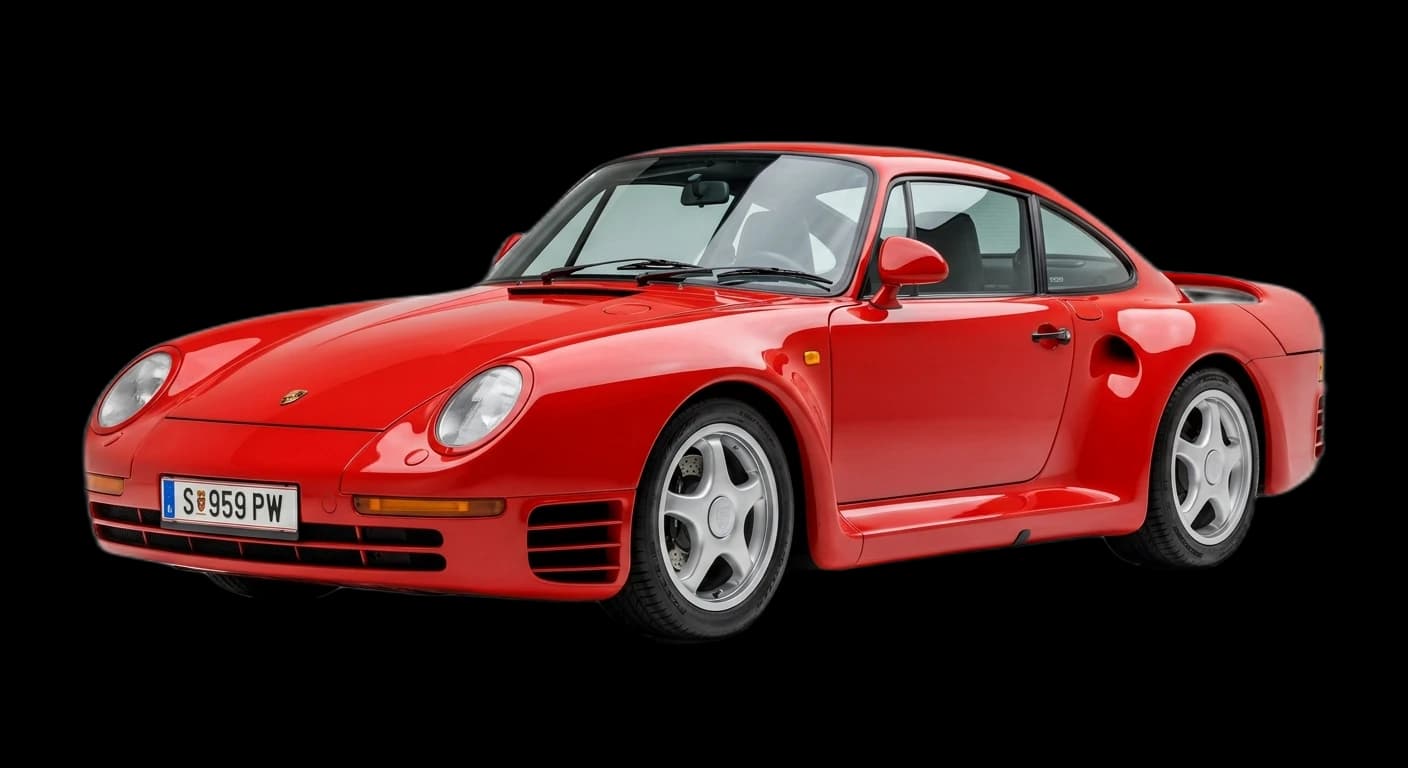
The F40 was the first production car to break the 200 mph barrier, reaching 201 mph in period tests. Unlike the Porsche 959 with its advanced electronics, the F40 used no driver aids. No traction control, no ABS, no power steering. The message was clear: this is a race car with license plates.
Enzo Ferrari died on August 14, 1988, a year after the F40's launch. He never saw another new Ferrari. The F40 was his final statement, and it remains the purest expression of what a Ferrari should be.
Originally priced at $400,000, speculation drove values to over $1 million by 1990. Today, the F40 commands $2.5 million to $4 million at auction.
Timeline
Production & Heritage
Value estimates are editorial assessments based on recent auction results and market trends.
Technical Specifications
Engine Details
Performance
Dimensions
Chassis & Suspension
Capacity
Source: Ferrari / Wikipedia
Tags
Designed by Pininfarina (Leonardo Fioravanti / Pietro Camardella)
From the 1980s
Featured in
Featured in Collections
References & Sources
More in Sports
See all
356 Pre-A
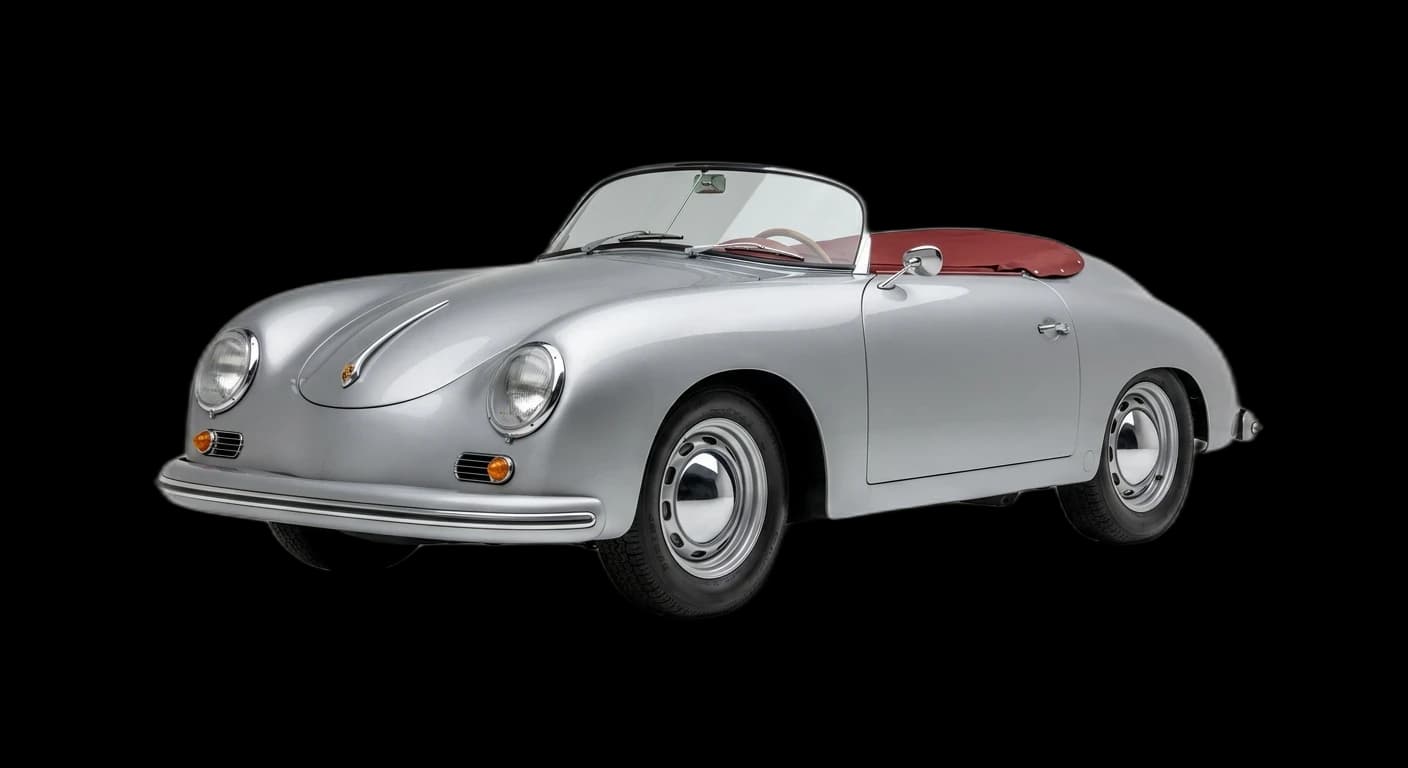
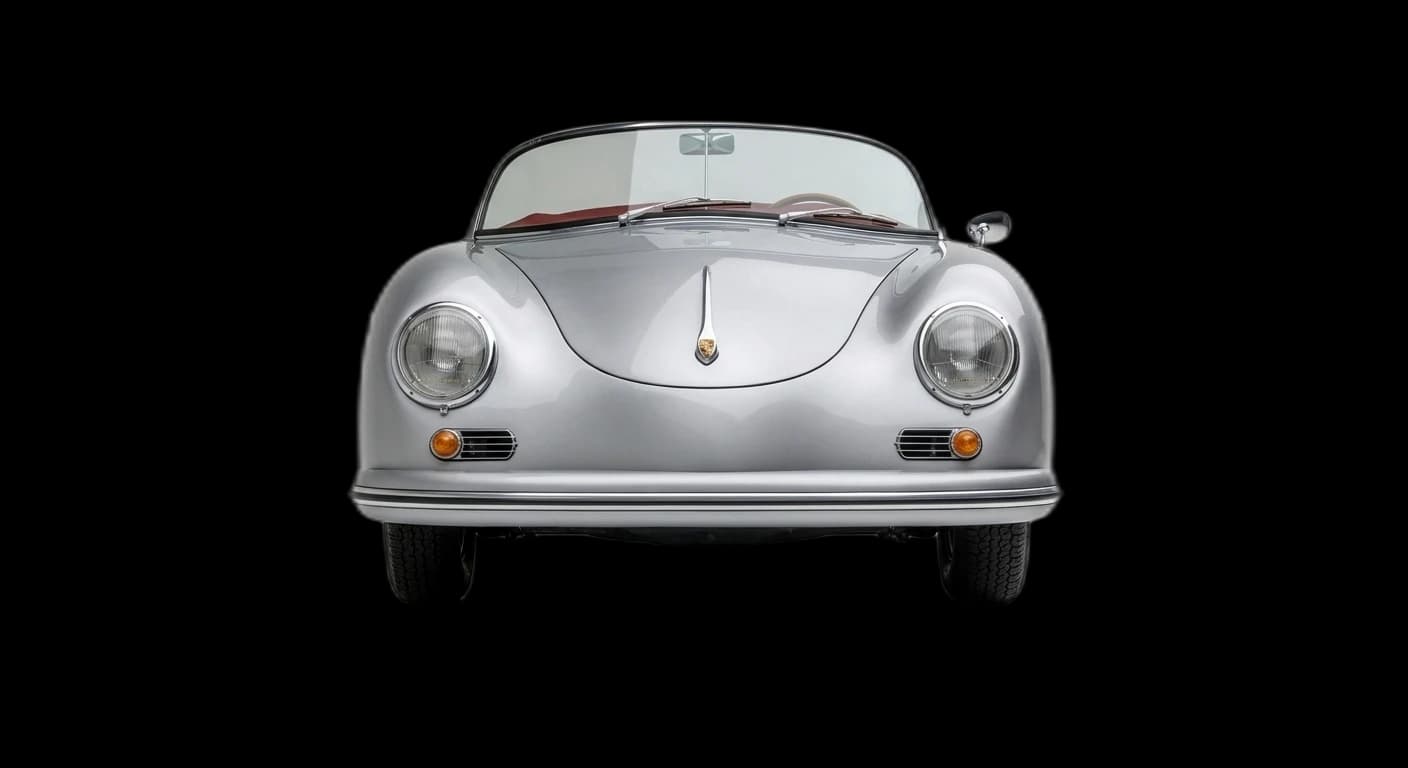
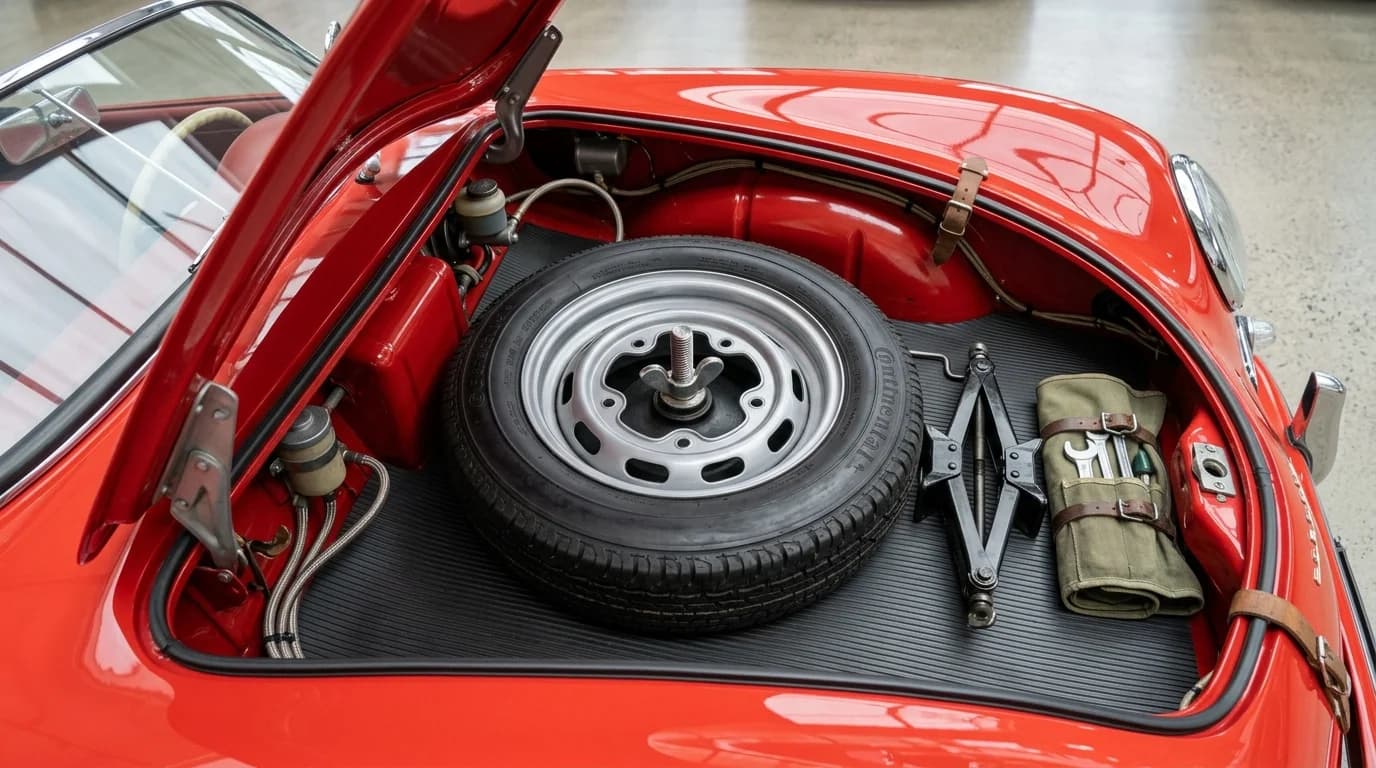
356 Speedster
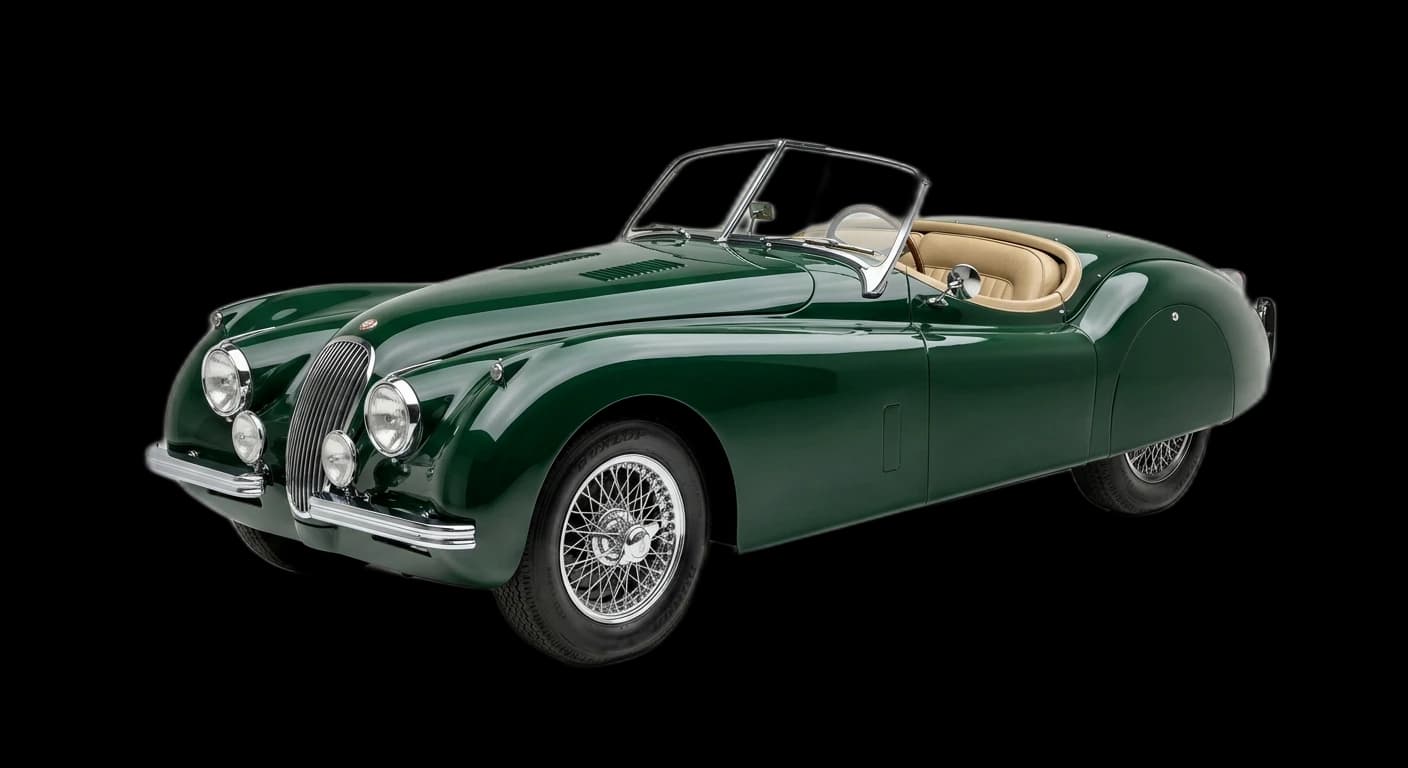
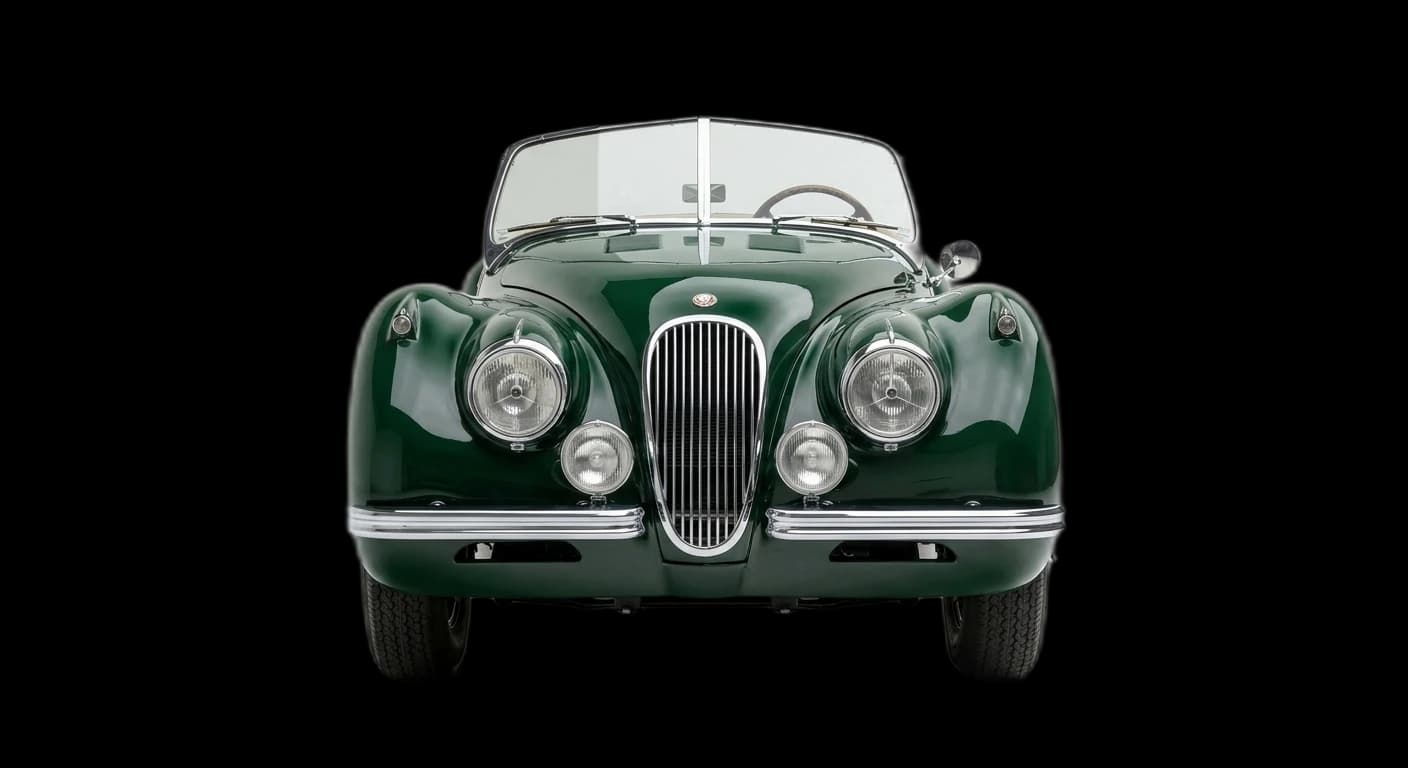
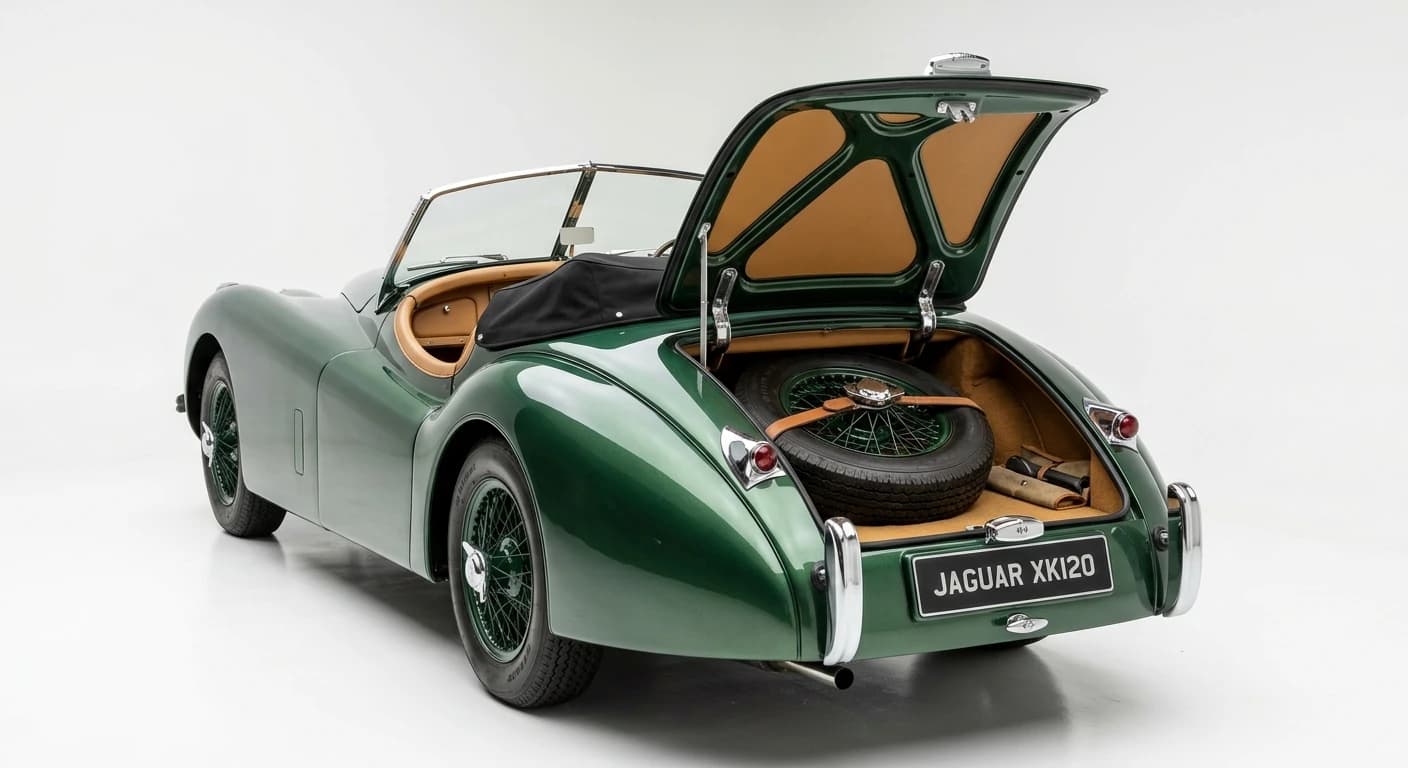
XK120
