
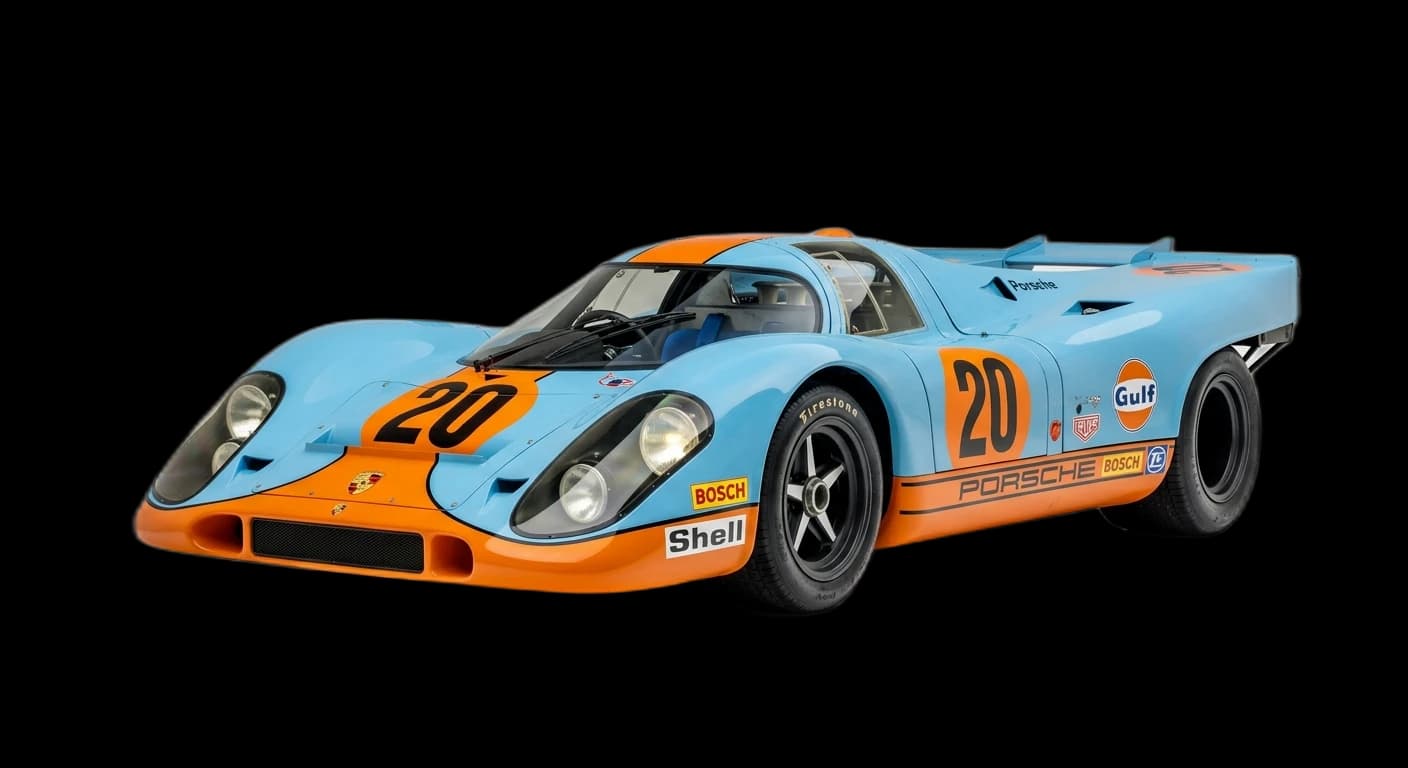
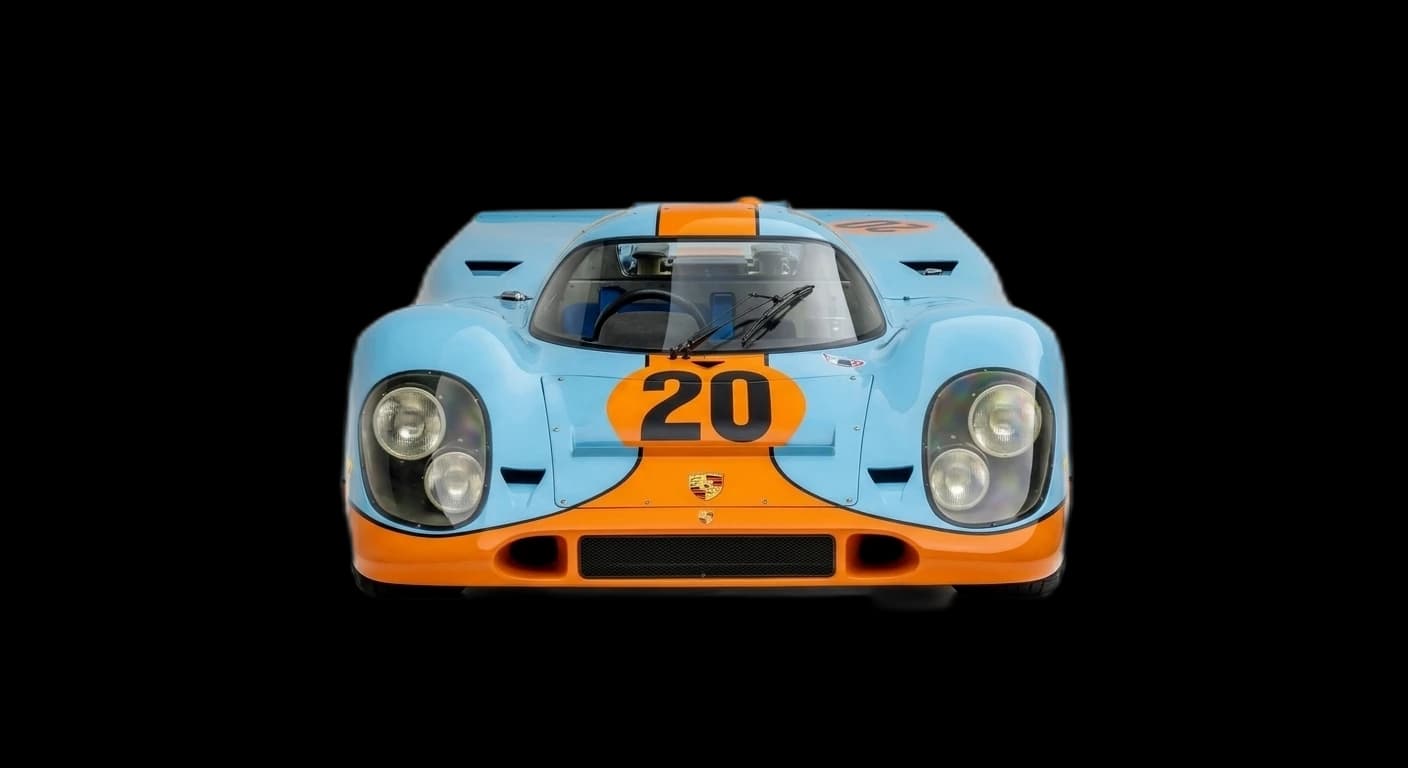
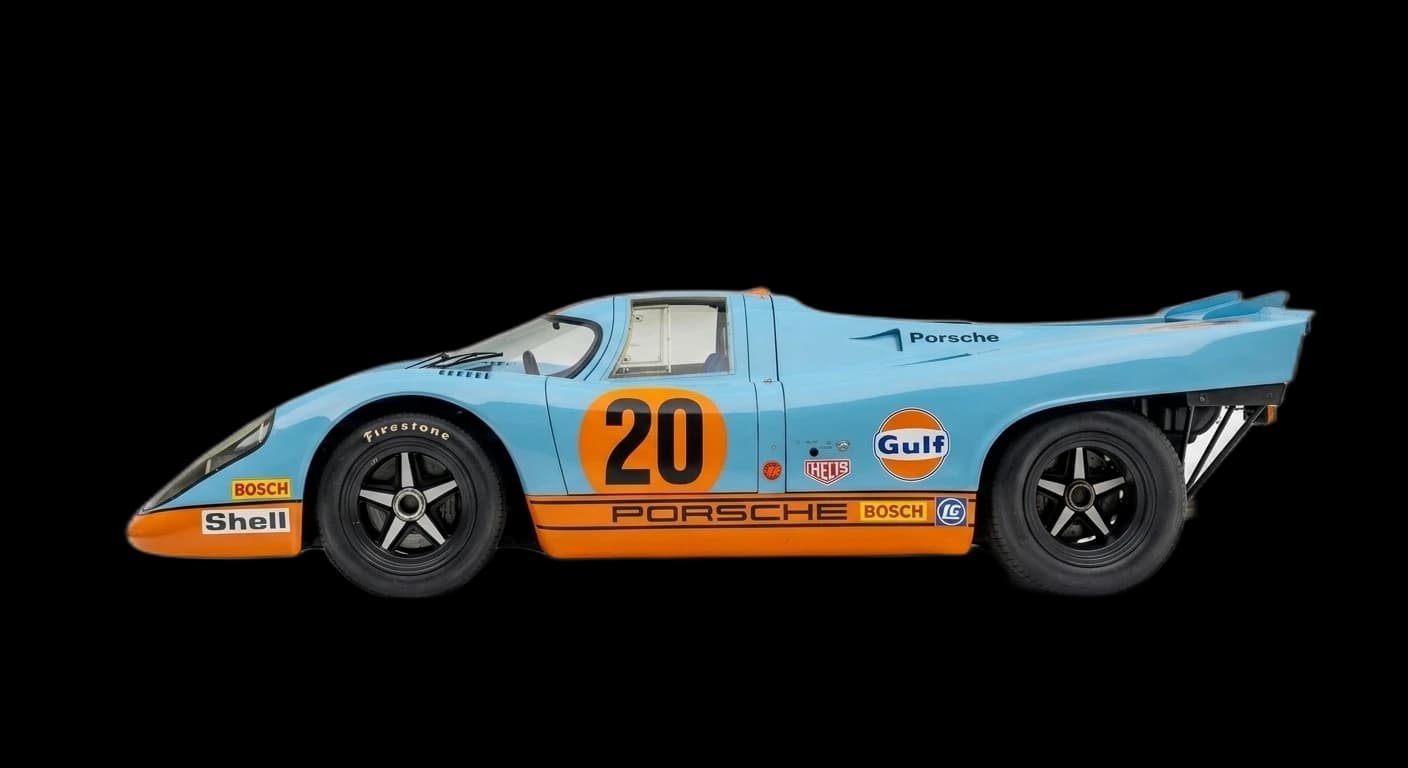
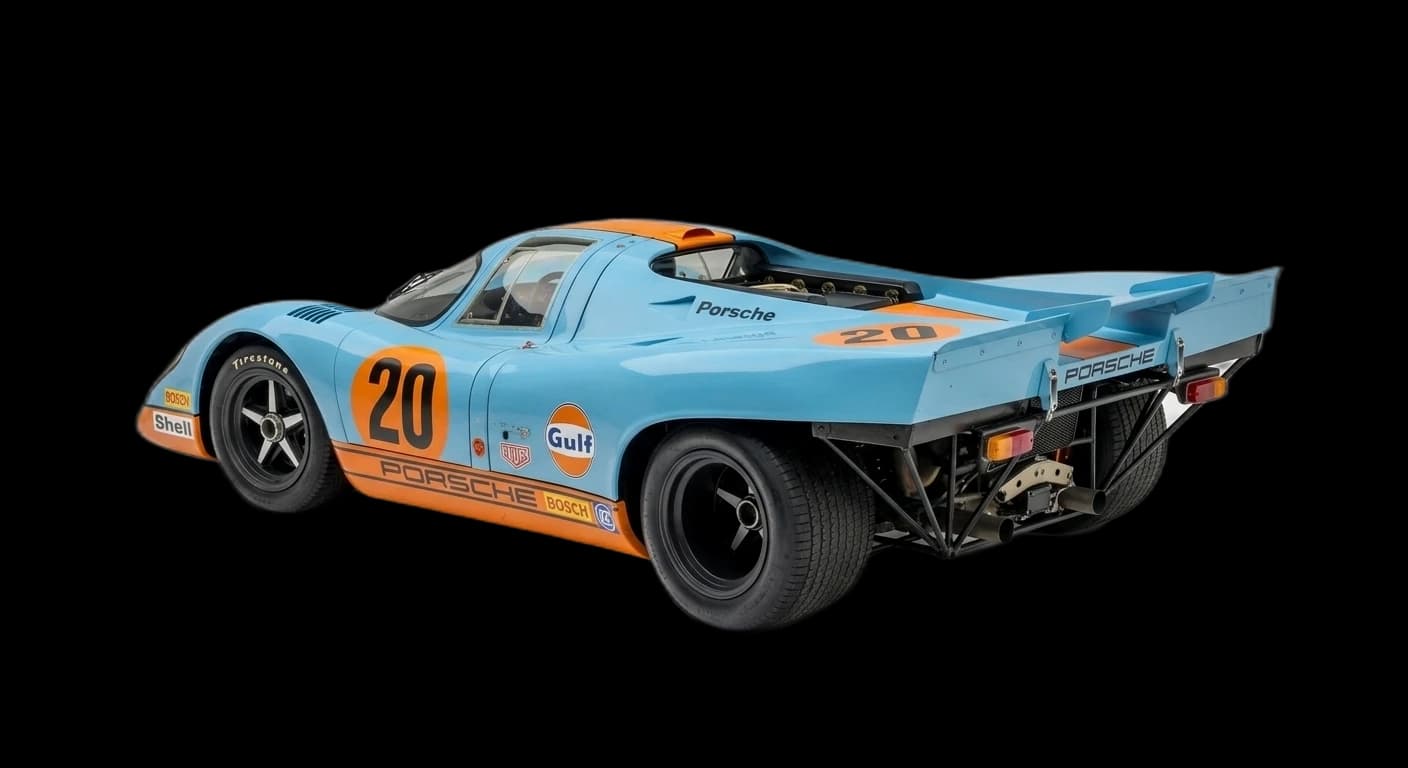
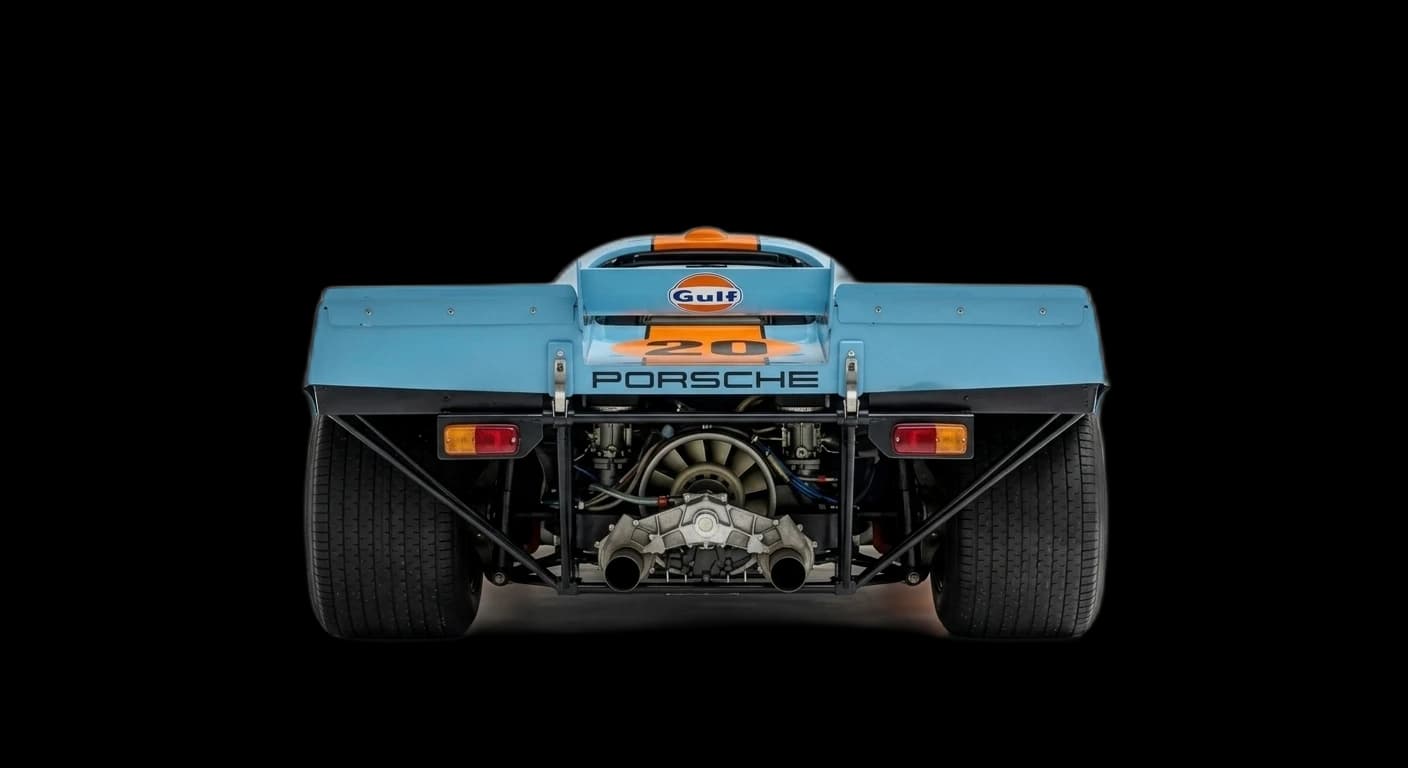
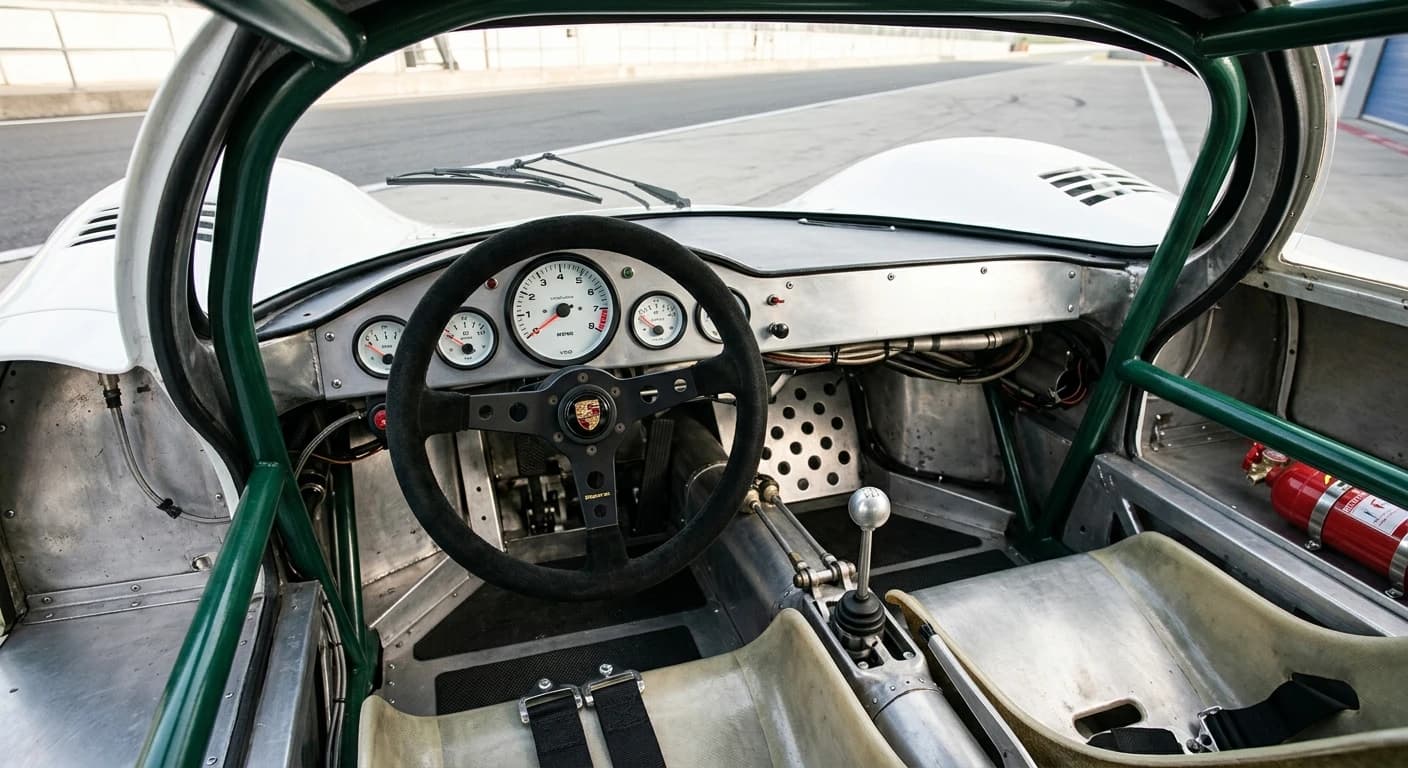
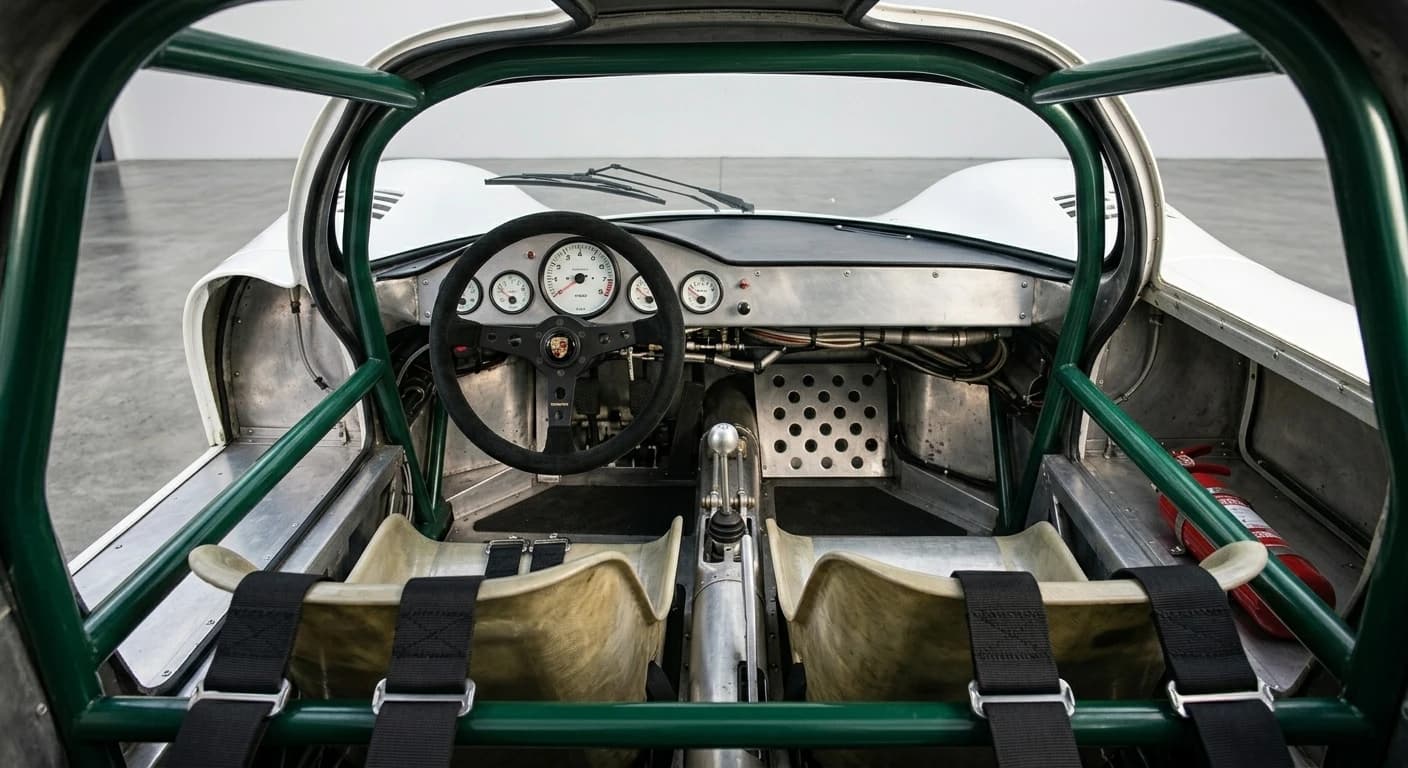
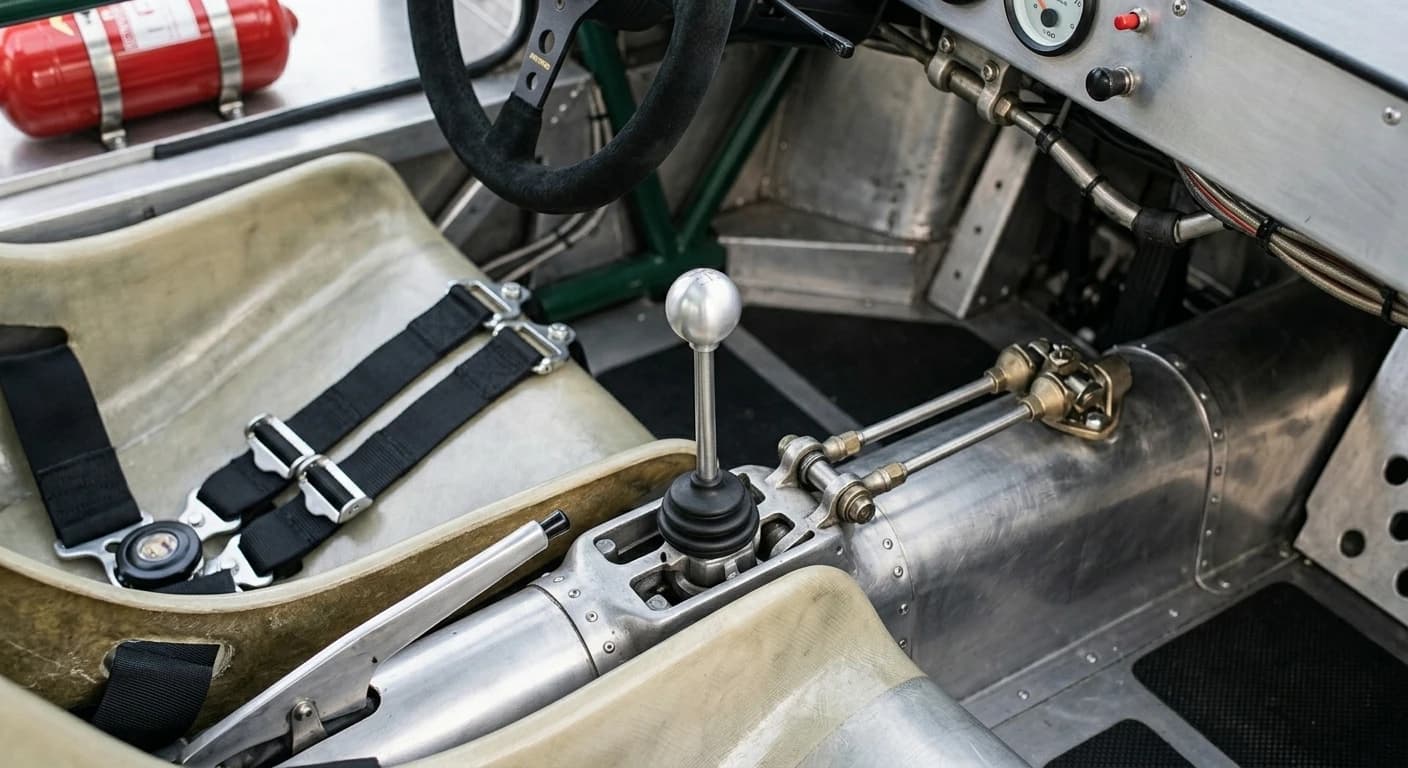
The car from Steve McQueen's Le Mans film. Porsche's first outright Le Mans winner (1970, 1971). Ferdinand Piech pushed through the 25-car homologation run despite the board's reservations. The Gulf-liveried 917K is the most iconic racing livery in history.
History
Ferdinand Piech, grandson of Ferdinand Porsche and future head of Volkswagen Group, championed the 917 project against internal resistance. The FIA's new Group 4 rules required 25 cars to be built. Porsche built exactly 25 and displayed them all in the factory courtyard for FIA inspection in March 1969.
The original long-tail 917 was nearly undriveable at high speed. The car would lift its front end at 240 mph, creating terrifying instability. John Wyer's Gulf-sponsored team developed the short-tail 917K (Kurzheck), which traded top speed for stability and became the dominant version.
At Le Mans 1970, the Gulf 917K driven by Richard Attwood and Hans Herrmann gave Porsche its first overall victory after years of class wins. In 1971, the Martini-liveried 917K of Helmut Marko and Gijs van Lennep set a distance record of 5,335 km that stood for 39 years.
The 917's flat-12 engine, essentially two flat-sixes joined at the crankshaft, produced 580 hp in 4.9-liter form and over 1,100 hp in the turbocharged 917/30 Can-Am variant. The 917/30 remains one of the most powerful racing cars ever built.
Steve McQueen's 1971 film Le Mans cemented the 917 in popular culture. The Gulf blue-and-orange livery became the most recognized racing color scheme in the world.
Timeline
Production & Heritage
Value estimates are editorial assessments based on recent auction results and market trends.
Technical Specifications
Engine Details
Performance
Dimensions
Chassis & Suspension
Capacity
Tags
Designed by Porsche Motorsport (Ferdinand Piech)
From the 1960s
Featured in Collections
References & Sources
More in Racing
See all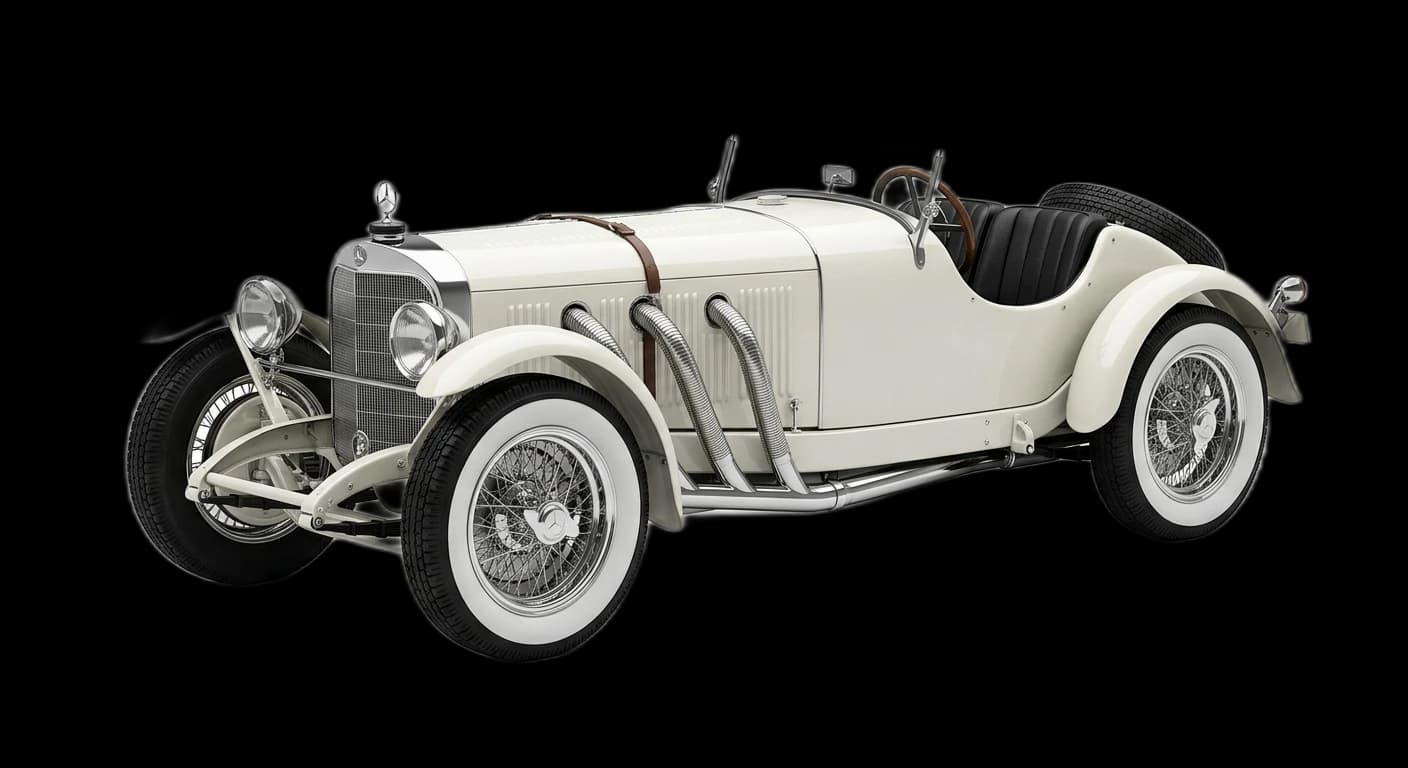
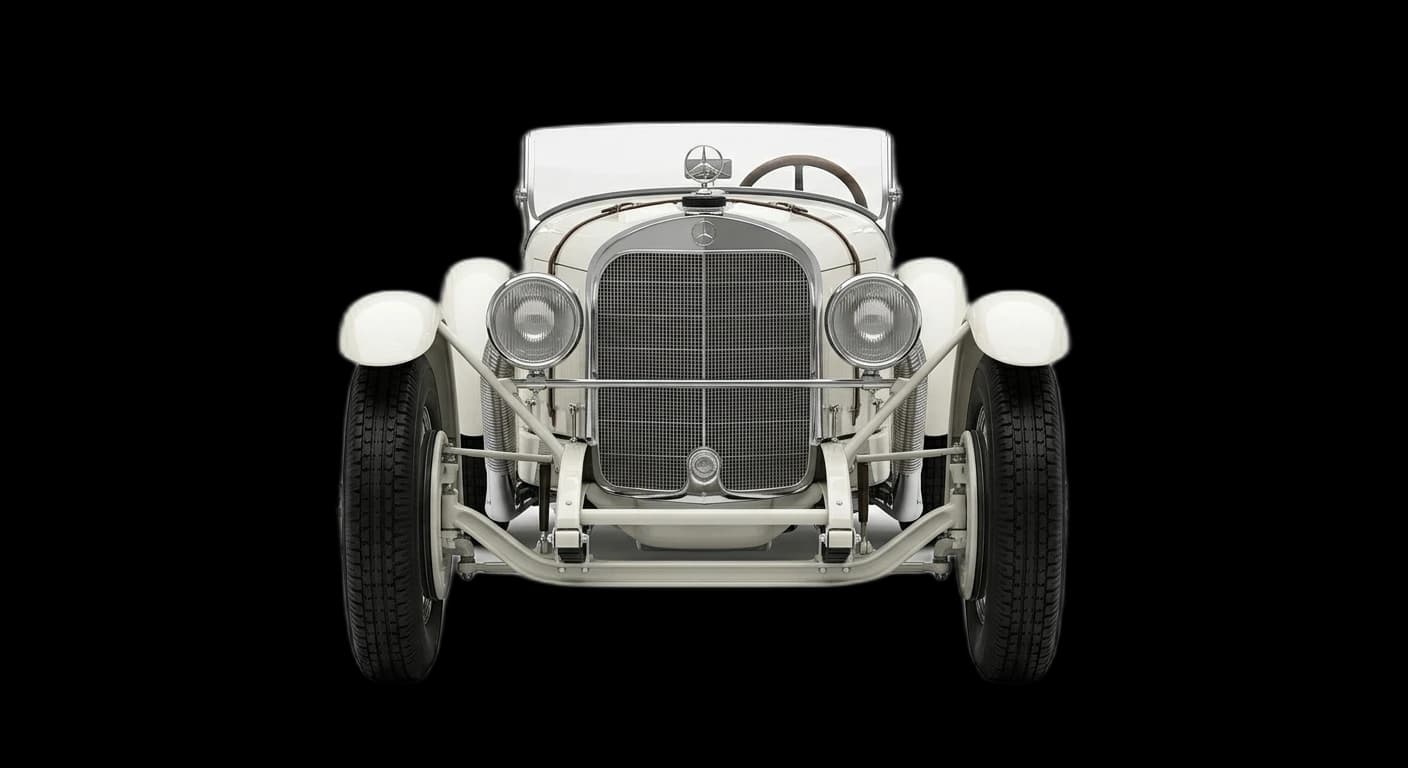
SSK
550 Spyder

D-Type
