The Group B Survivors: Lancia Delta Integrale and the Cars That Outlived the Apocalypse
When the FIA killed Group B in 1986, the technology didn't die with it. It went underground — into road cars that carried rally DNA onto public roads.
Group B was the most dangerous,
Group B was the most dangerous, most spectacular, and shortest-lived era in motorsport history. From 1982 to 1986, the FIA allowed manufacturers to build rally cars with virtually no technical restrictions. The results were terrifying: 500+ hp, lightweight composite bodies, and technology that made the cars faster than their drivers could safely control on narrow forest roads lined with spectators.
When Henri Toivonen and his co-driver Sergio Cresto died in a Lancia Delta S4 at the 1986 Tour de Corse — the car leaving the road, falling into a ravine, and burning beyond recognition — the FIA cancelled Group B immediately. The most advanced competition cars ever built were banned overnight.
But the engineering didn't disappear. It migrated into road cars.
The Lancia Delta Integrale is the
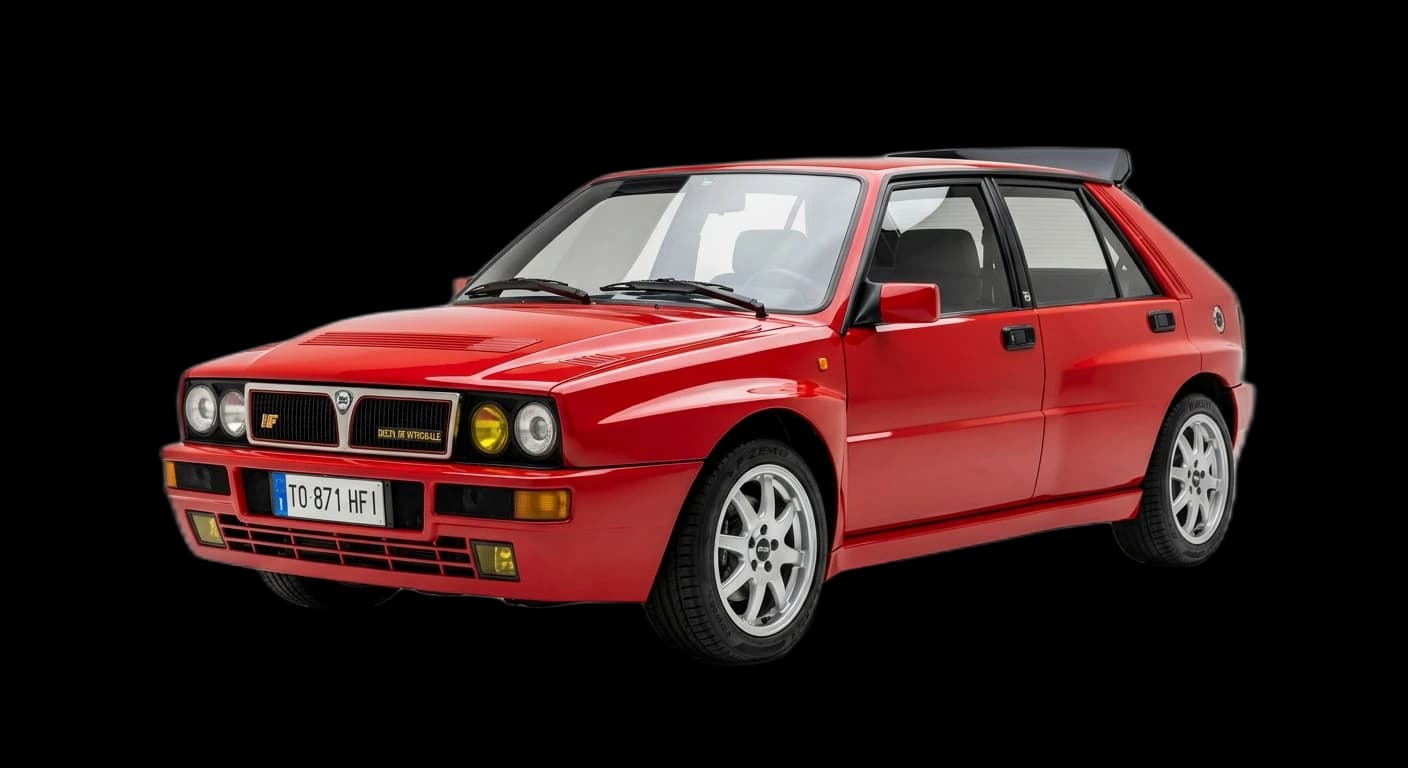
The Lancia Delta Integrale is the purest Group B survivor. Lancia took its humble Delta hatchback — a Giugiaro-designed family car — and rebuilt it into a rally weapon. The 2.0-liter turbocharged four-cylinder, permanent all-wheel drive with Torsen center differential, and widened bodywork created a car that won six consecutive World Rally Championship manufacturers' titles from 1987 to 1992. No other car has matched that record.
The road-going Integrale evolved through four iterations: the HF 4WD (185 hp), the 8v (185 hp), the 16v (200 hp), and the Evoluzione (210 hp). Each was wider, more aggressive, and more capable than the last. The Evo II, with its adjustable center differential and wider wheel arches, was the closest thing to a Group A rally car you could register for the road.
The Porsche 959 took a different lesson from Group B. Where the Delta was a rally car with license plates, the 959 was a technological laboratory. Sequential twin-turbocharging, electronically controlled all-wheel drive with variable torque split, tire pressure monitoring, and a ride-height adjustment system — all in 1986. The 959 was the first road car to exceed 300 km/h with all-wheel drive.
The Renault 5 Turbo was Group
The Renault 5 Turbo was Group B's wildest road car. Renault moved the engine from the front to behind the driver, widened the rear bodywork dramatically, and created something that looked like a cartoon and drove like a go-kart. The 160 hp turbocharged engine sat where the rear seats should have been. It was absurd, dangerous, and unforgettable.
These cars shared a common philosophy inherited from Group B: performance justified any engineering complexity. All-wheel drive, turbocharging, advanced aerodynamics, and lightweight construction — technologies we now take for granted in any hot hatchback — were pioneered in the crucible of the most extreme racing series ever sanctioned.
The Delta Integrale's values reflect its significance. Evoluzione models regularly exceed EUR 100,000 at auction. The Porsche 959 now commands $1.5 million or more. Even the Renault 5 Turbo sells for EUR 80,000 to EUR 150,000. The market understands: these are the cars that carried Group B's DNA into the real world.
Written by Singular Heritage Team
Published October 16, 2025 · 9 min read
Part of the Singular Heritage network