
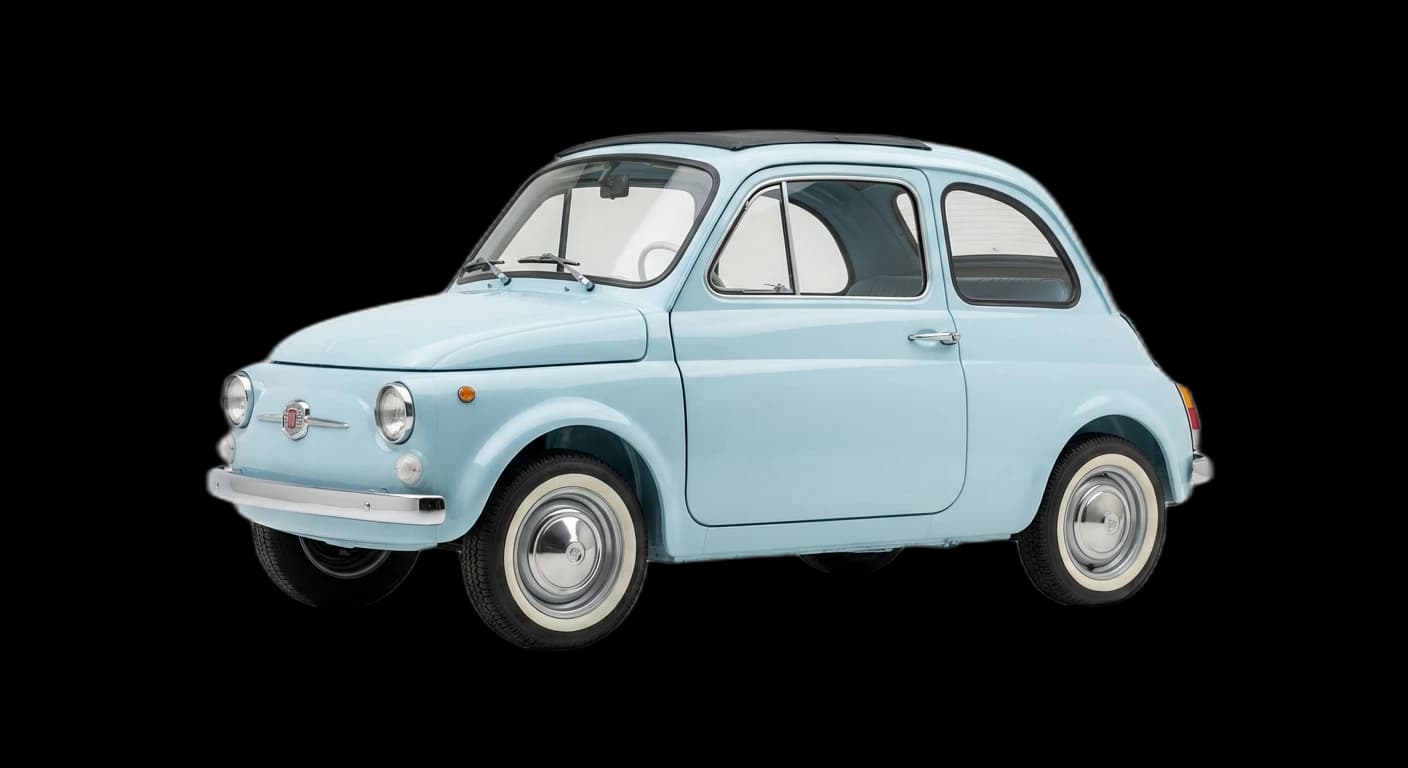
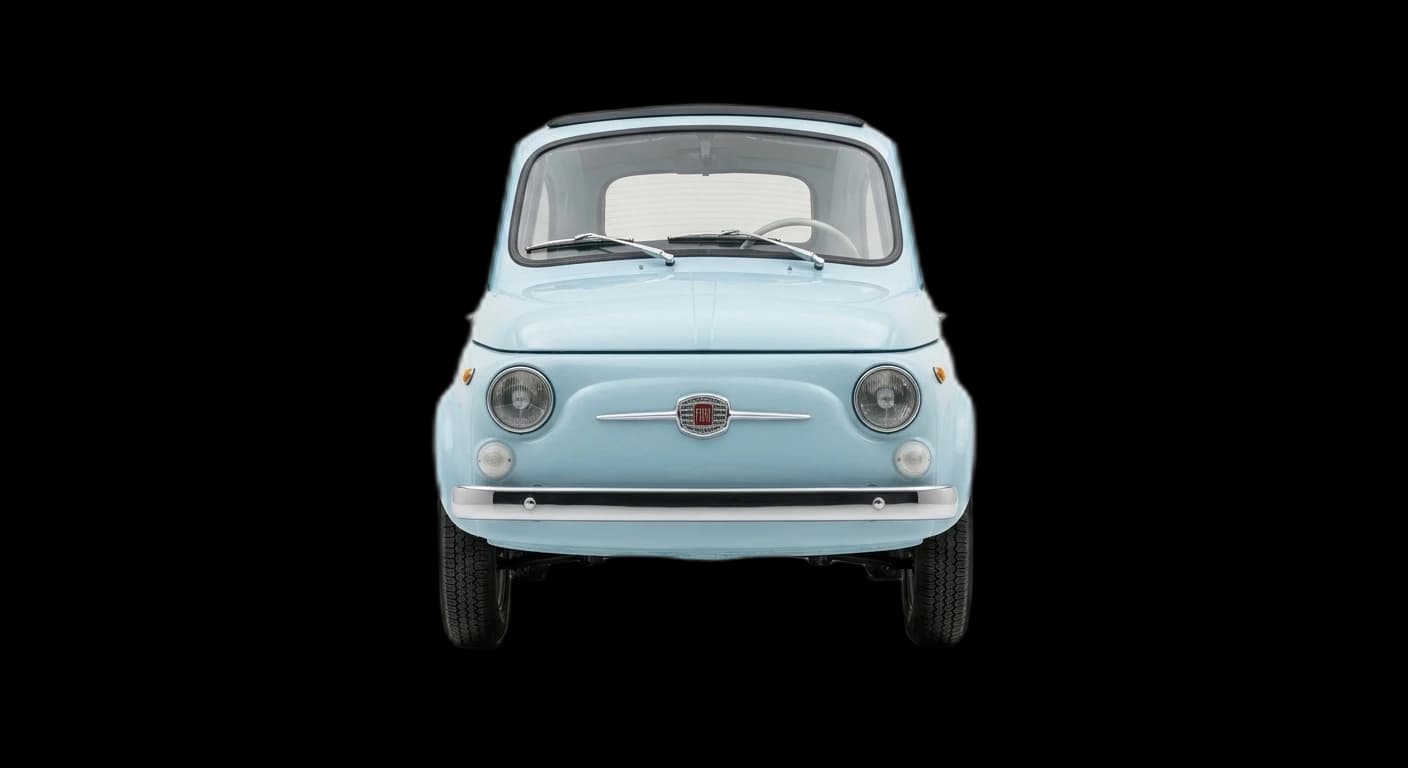
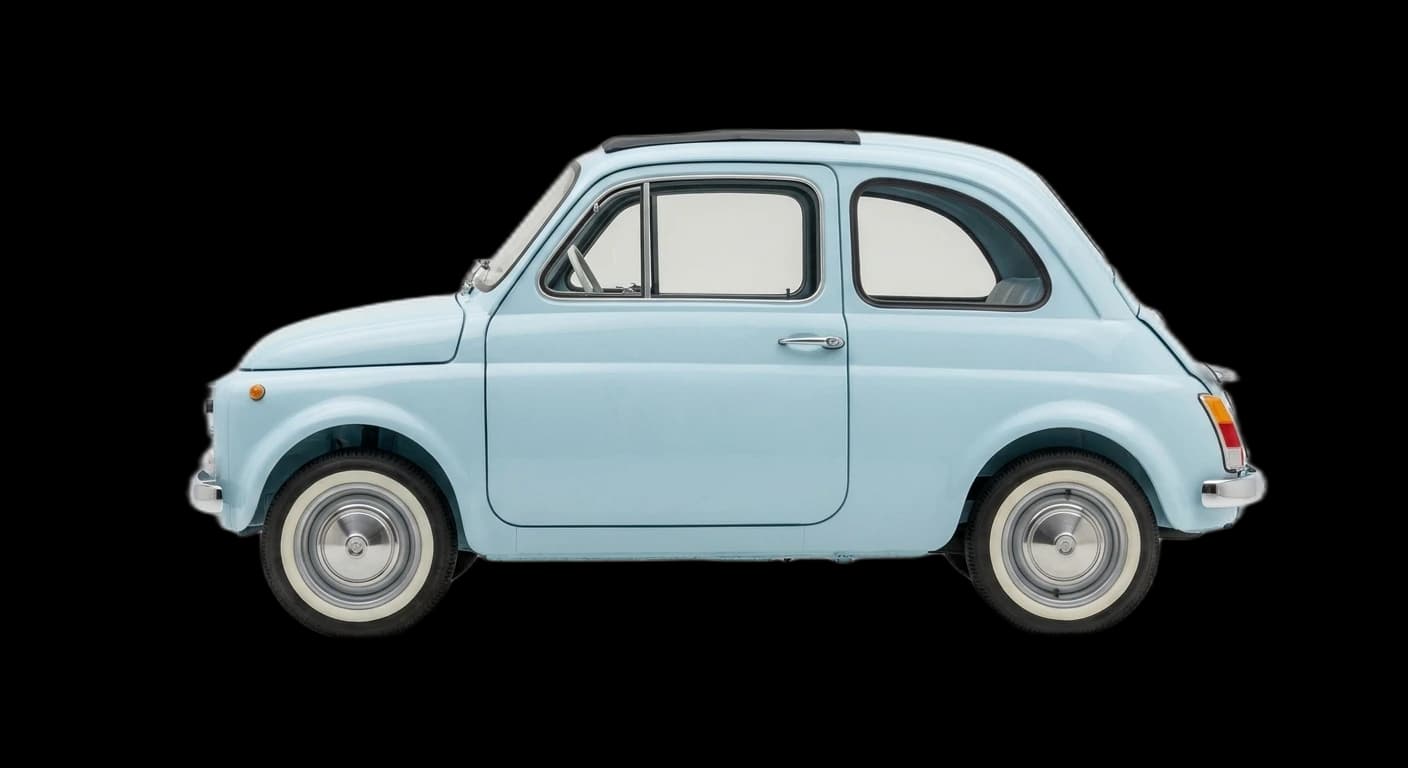
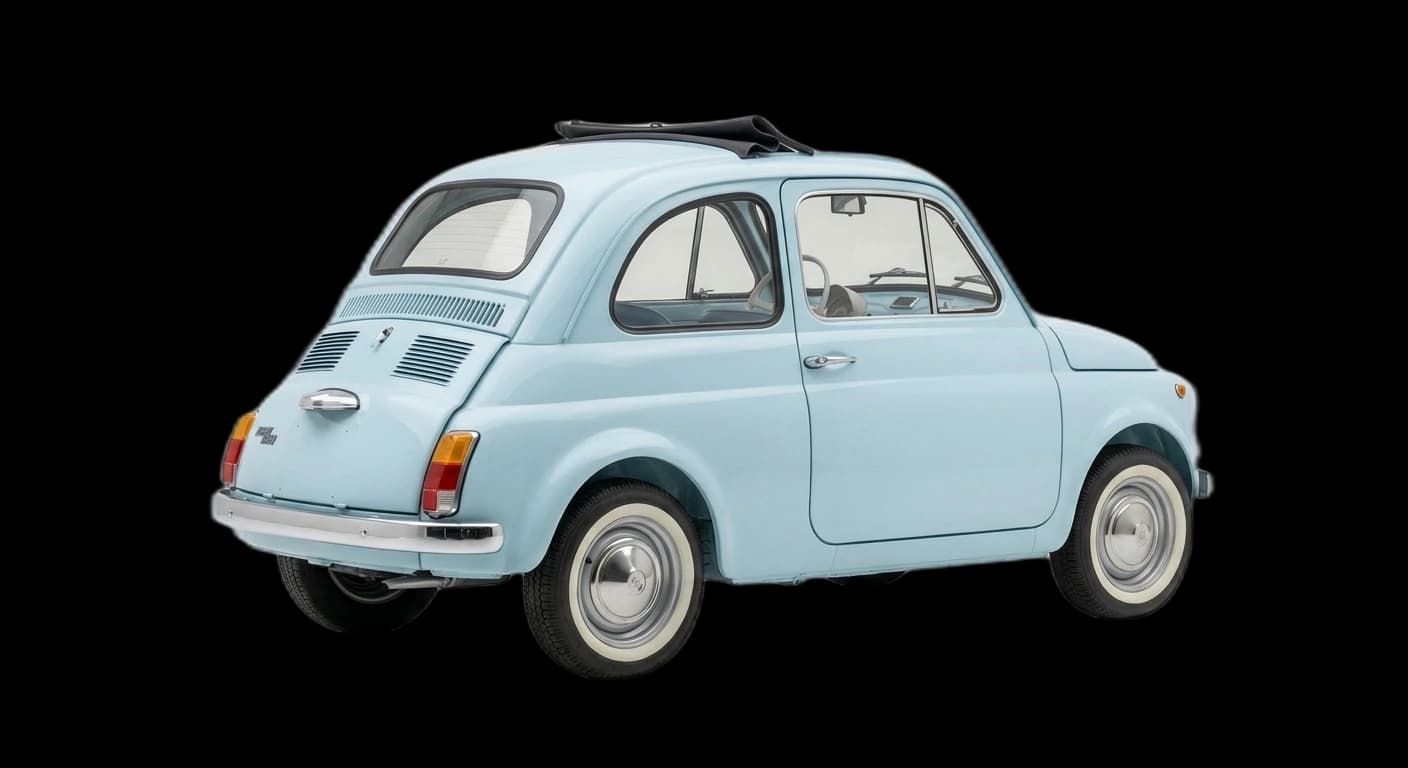
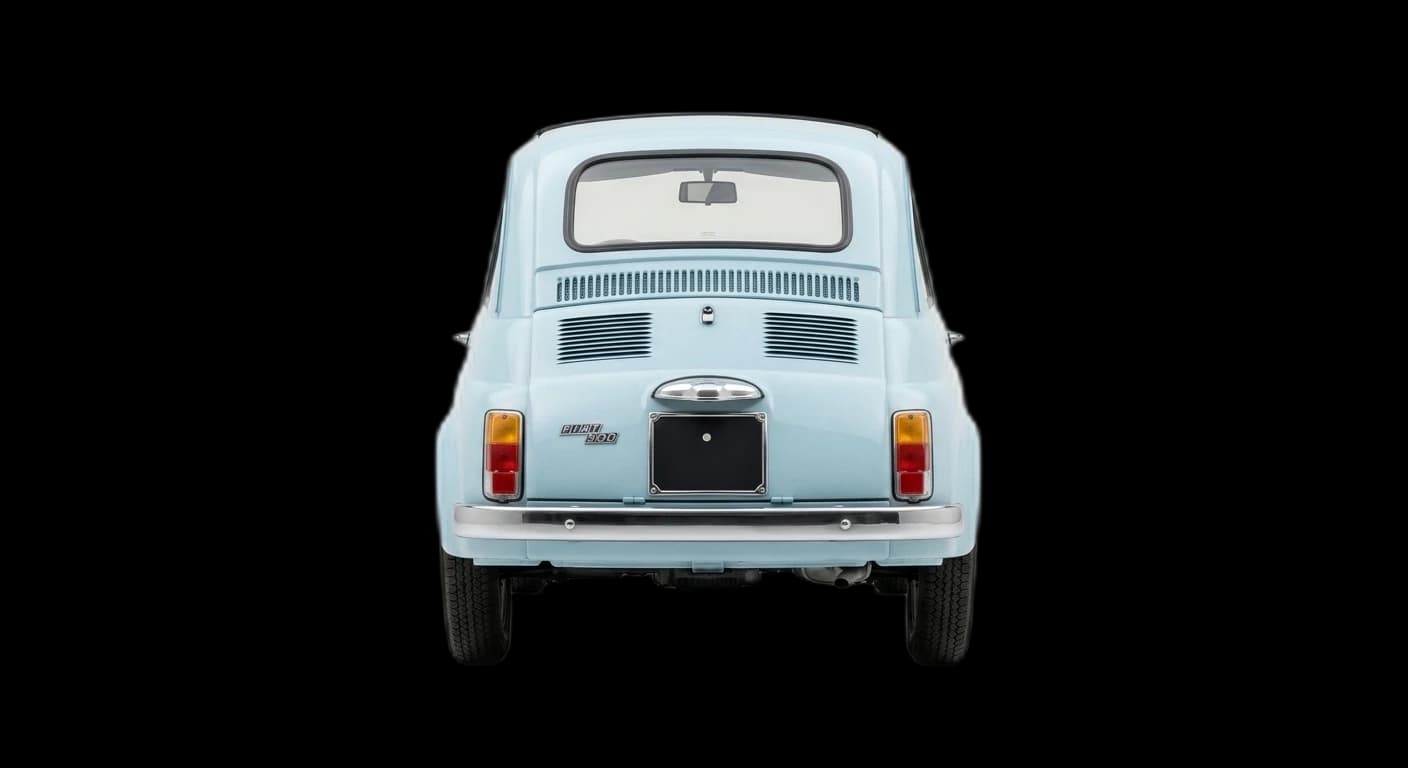
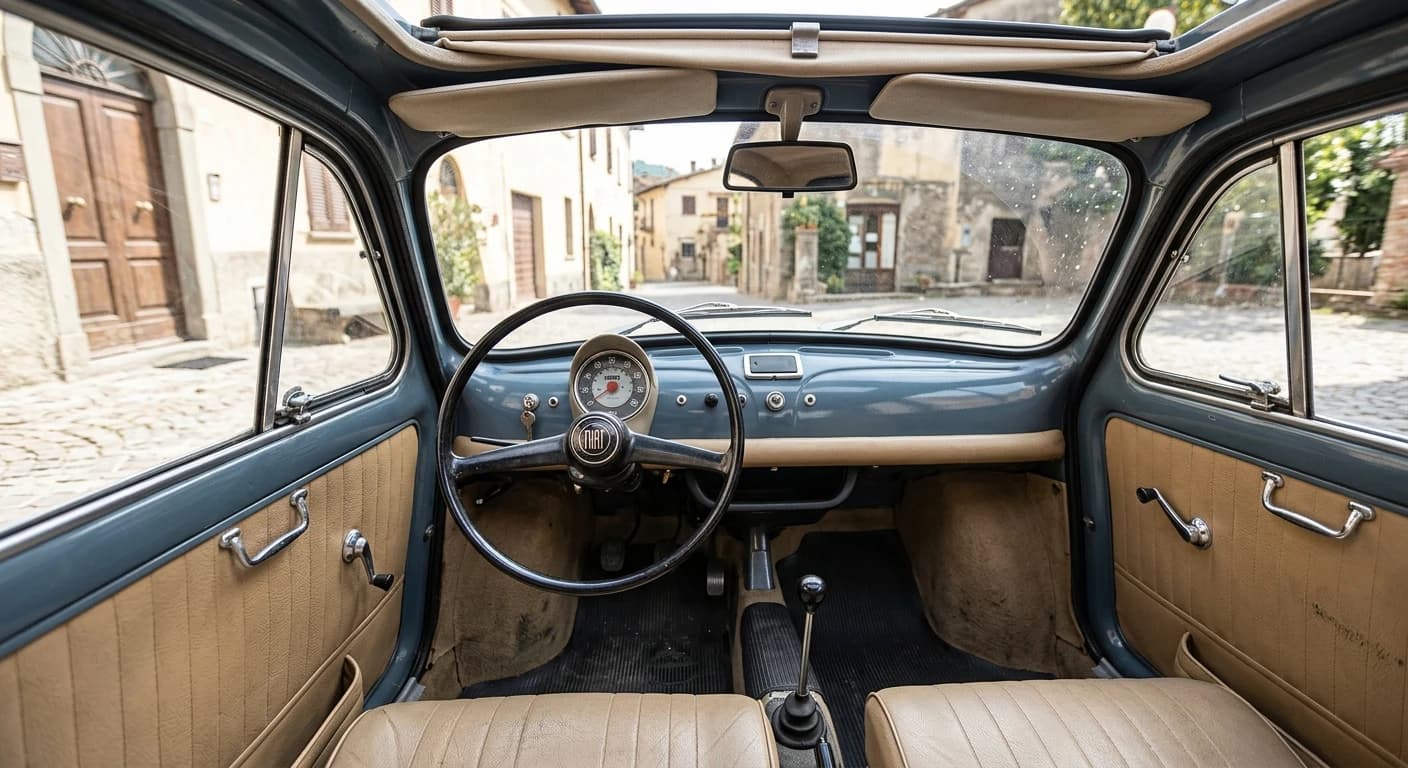
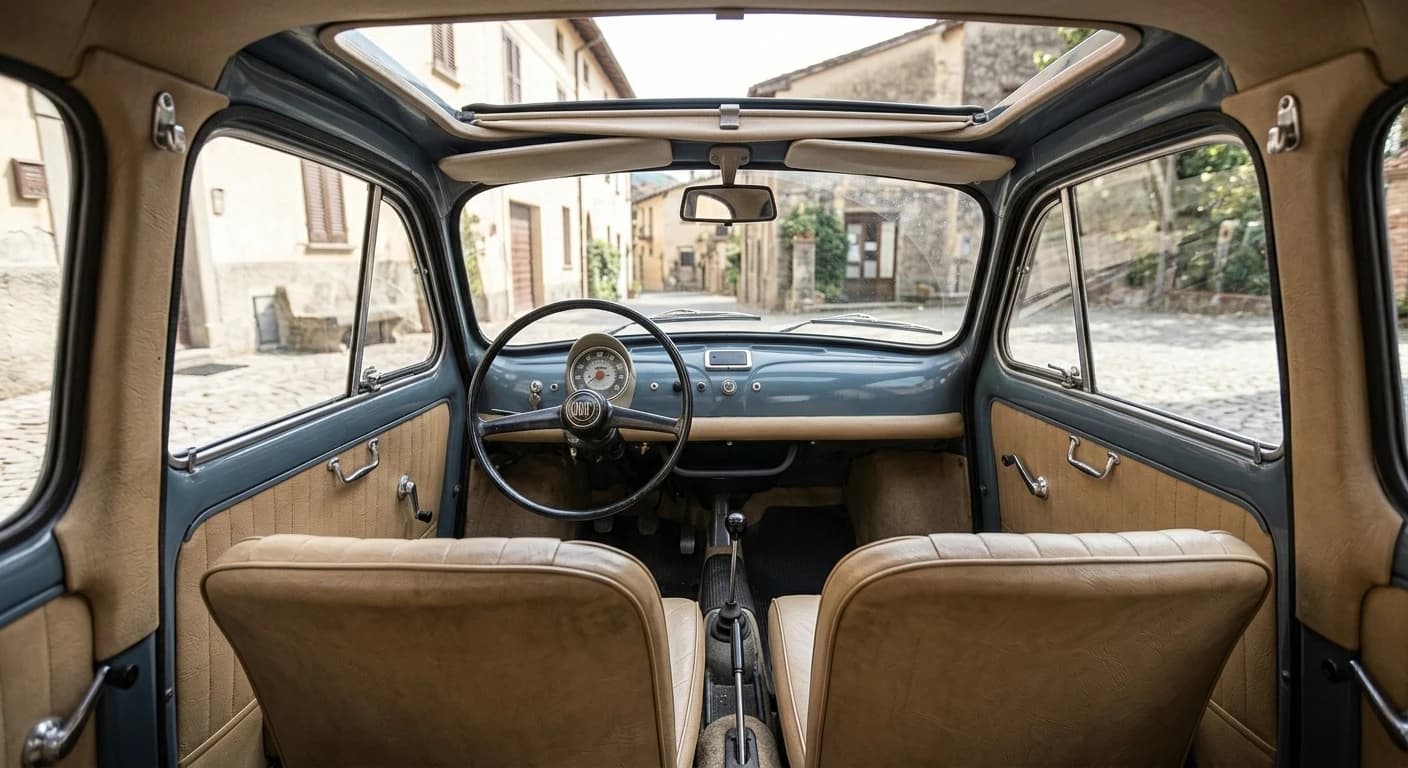
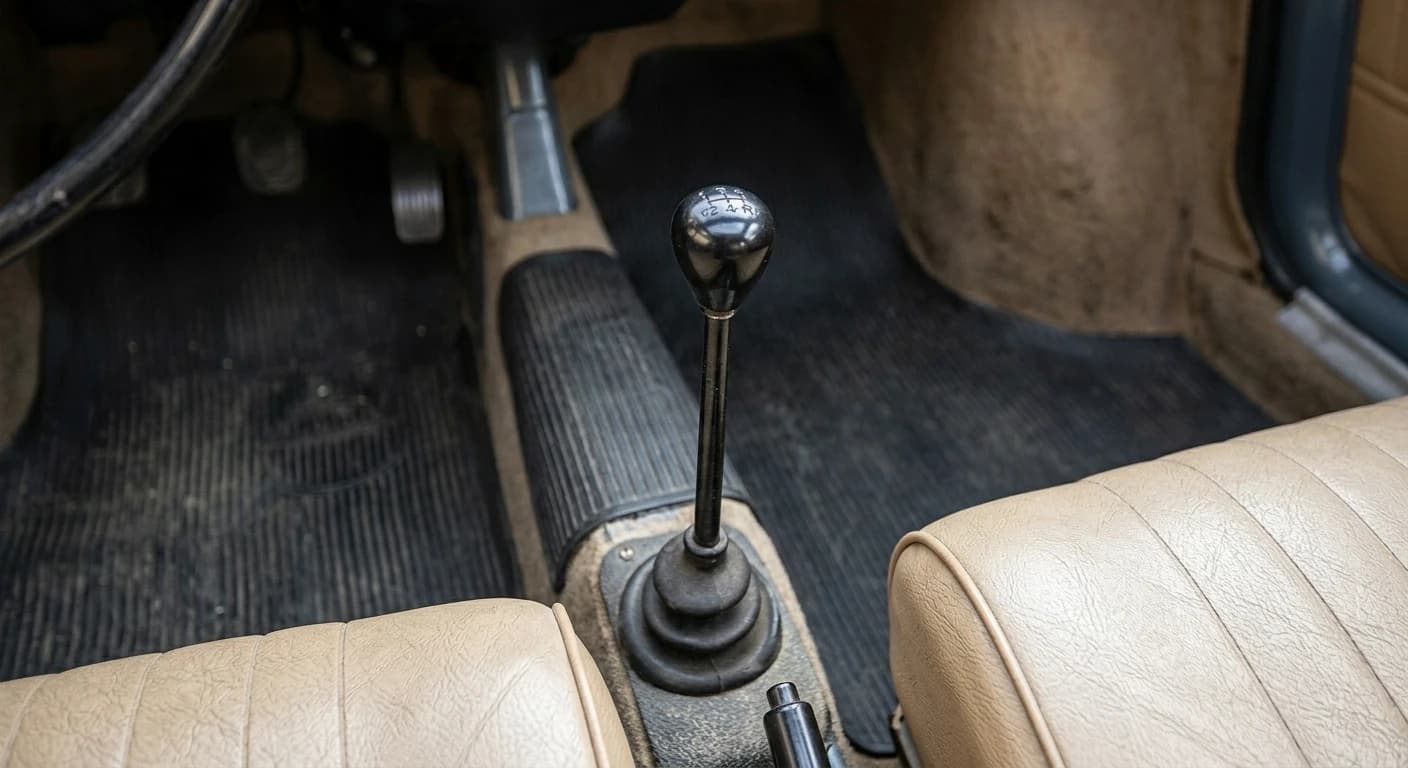
Italy's people's car. 3.9 million built. Motorized an entire nation during the economic miracle of the 1960s. The rear-engine, air-cooled layout and full-width canvas roof made it practical despite being shorter than most modern SUV bumpers.
History
Post-war Italy needed cheap, reliable transportation. Dante Giacosa at Fiat designed the Nuova 500 as the smallest possible four-seat car: 2.97 meters long, powered by a 479cc air-cooled two-cylinder engine producing just 13 hp (later 18 hp).
The 500 debuted in July 1957 to lukewarm reviews. Critics found it underpowered and cramped. But Italian families discovered that four people could fit (uncomfortably), it could reach 85 km/h (eventually), and it cost less than a Vespa with a sidecar.
The car became the symbol of Italy's economic miracle. In Naples, entire families of five would ride a single 500. In Rome, it navigated streets designed for horse carts. In Milan, factory workers bought them on installment plans and parked three deep in spaces meant for one car.
3,893,294 were built across multiple variants including the Sport, Giardiniera wagon, and the Abarth-tuned versions. The 500 transformed Italy from a nation of pedestrians and cyclists into a nation of drivers.
Clean examples now command EUR 15,000 to EUR 30,000. The Fiat 500 is displayed in the Museum of Modern Art in New York as a masterpiece of industrial design.
Timeline
Production & Heritage
Value estimates are editorial assessments based on recent auction results and market trends.
Technical Specifications
Engine Details
Performance
Dimensions
Chassis & Suspension
Capacity
Source: Fiat / Wikipedia
Tags
Designed by Dante Giacosa
From the 1950s
Featured in
Featured in Collections
References & Sources
More in City
See all
Beetle (Type 1)
